




From Collateral to Confidence
How Bangladesh’s New Startup Grant Could Redefine Entrepreneurship for a Generation For decades, the biggest obstacle facing aspiring entrepreneurs
How Bangladesh’s New Startup Grant Could Redefine Entrepreneurship for a Generation
For decades, the biggest obstacle facing aspiring entrepreneurs in Bangladesh was not a lack of ideas—it was a lack of access. Brilliant founders with innovative solutions often found themselves turned away by traditional financing systems because they lacked land, property, or wealthy guarantors.
That narrative may now be changing.
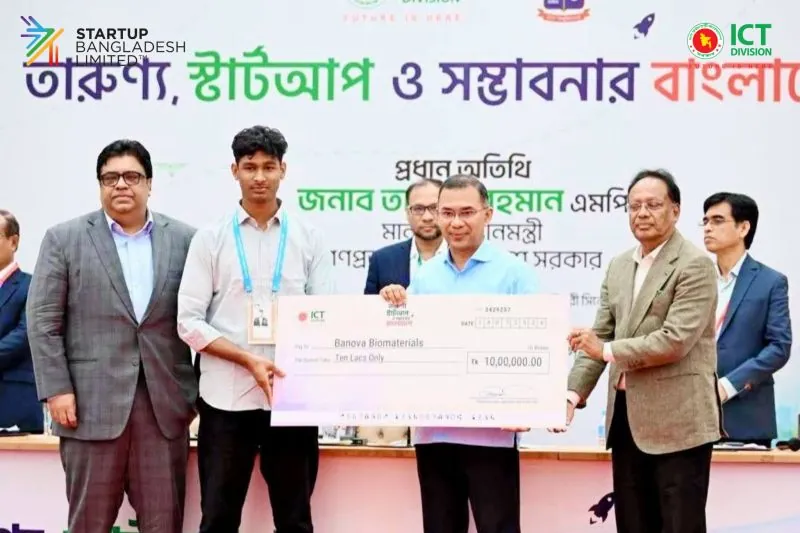
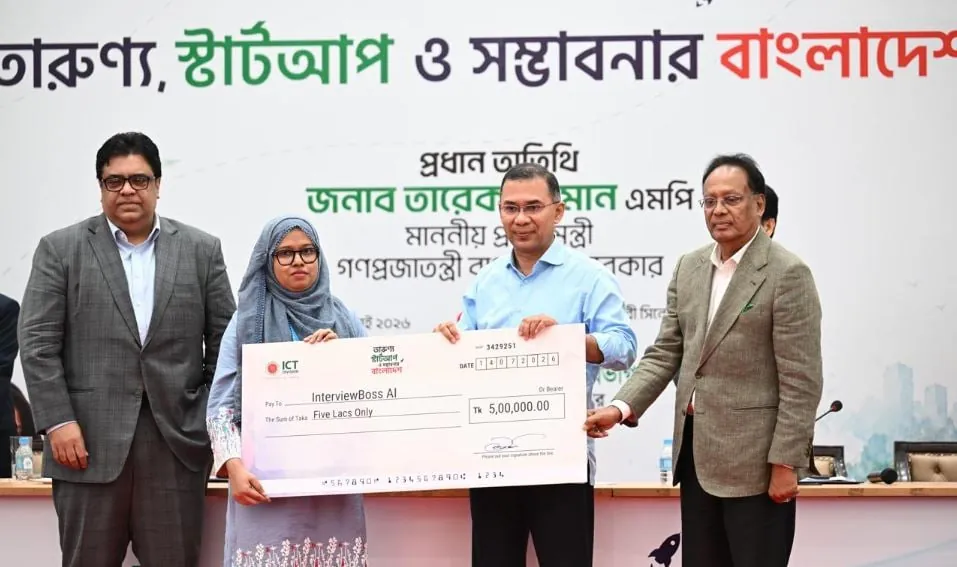
In one of the most ambitious entrepreneurship announcements in recent years, Prime Minister Tarique Rahman unveiled a nationwide startup grant initiative under the newly launched National Startup and Entrepreneurship Platform, promising financial support ranging from Tk 5 lakh to Tk 5 crore for promising ventures.
More significantly, the Prime Minister announced that qualified entrepreneurs would no longer need to pledge collateral to receive government-backed funding—a move that has the potential to fundamentally reshape Bangladesh’s innovation landscape.
A New Vision for Innovation
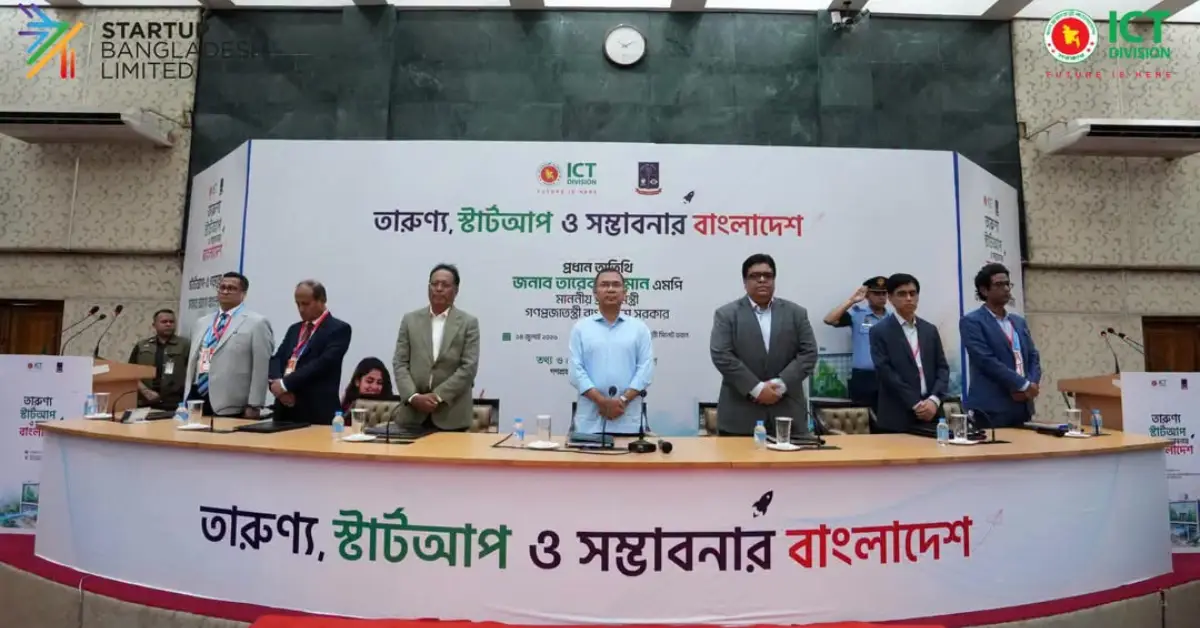
The announcement came during the event “Youth, Startups and a Promising Bangladesh” held at the Nawab Nawab Ali Chowdhury Senate Bhaban of the University of Dhaka.
The programme, jointly organized by the ICT Division and the University of Dhaka, brought together more than 230 students from leading public and private universities, startup founders, policymakers and ecosystem leaders.
The event also marked the official launch of the National Startup and Entrepreneurship Platform, envisioned as a single digital gateway where founders can access:
- Government grants
- Startup financing
- Mentorship
- Training
- Investor connections
- Business development support
- National partner networks
Rather than forcing entrepreneurs to navigate multiple government offices, the platform aims to consolidate essential services into one integrated ecosystem.
The Tk 500 Crore Commitment
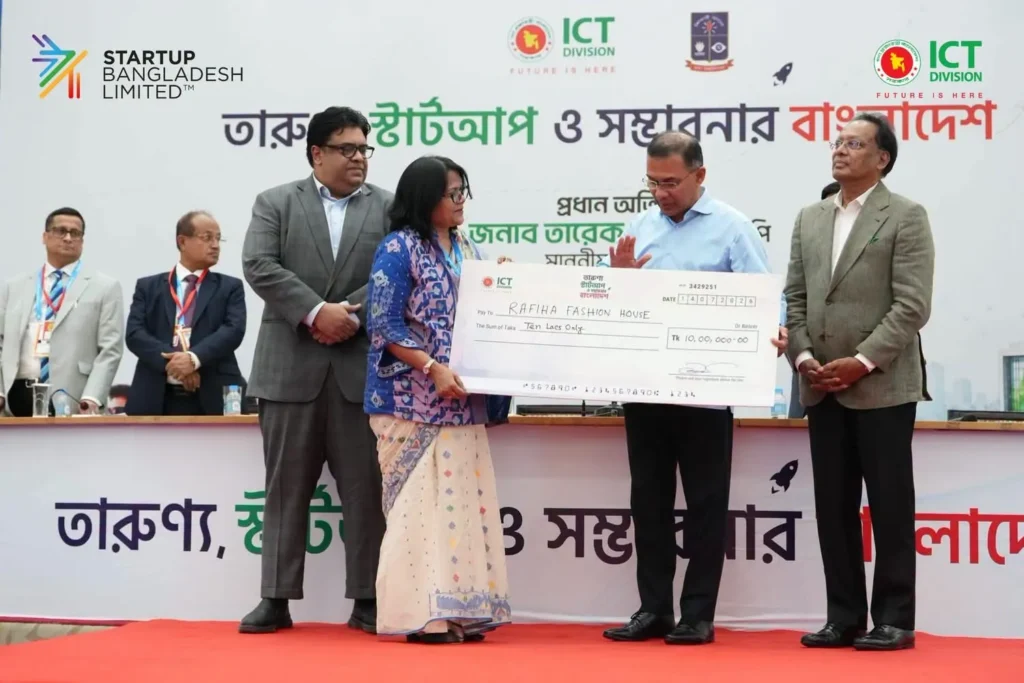
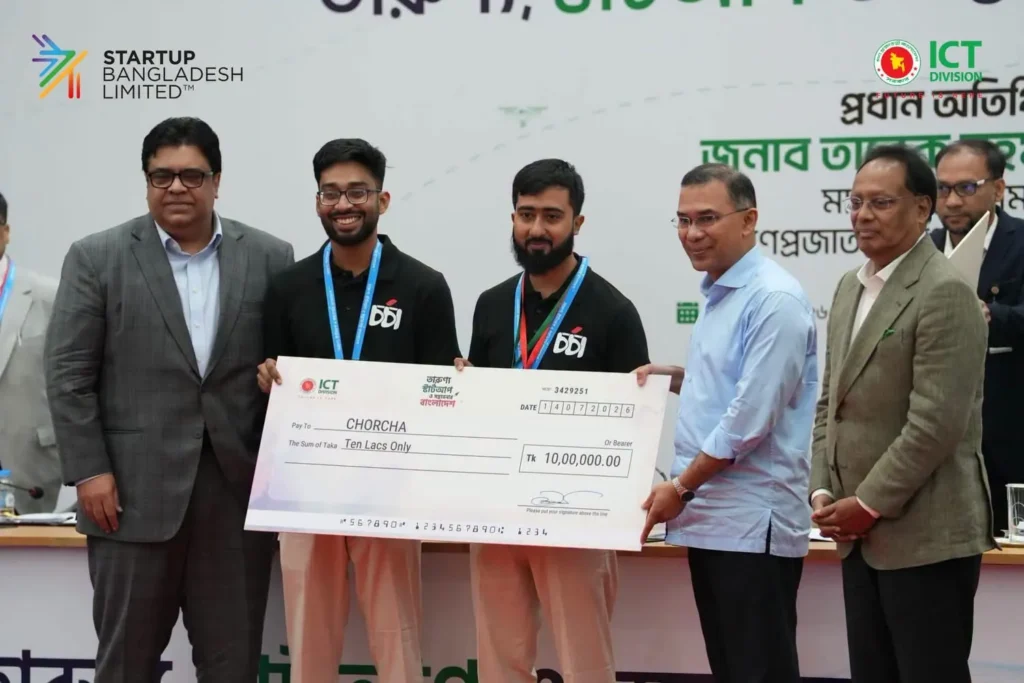
At the heart of the initiative lies a Tk 500 crore allocation by the ICT Division dedicated to supporting startups.
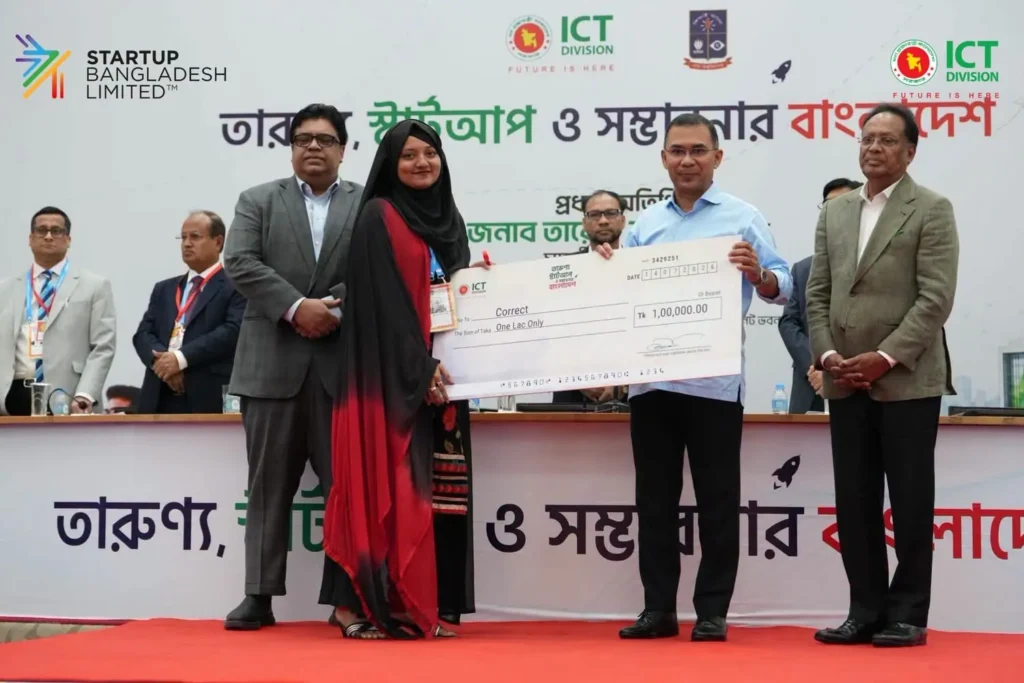
According to the Prime Minister, eligible founders may receive financial assistance ranging from Tk 5 lakh for early-stage ventures to Tk 5 crore for scalable, high-potential businesses, depending on the strength and maturity of their projects.
Perhaps the most headline-grabbing announcement was the government’s decision to eliminate conventional collateral requirements.
“Entrepreneurs wishing to begin a startup for the first time will no longer have to go through conventional banking procedures such as providing land, property or other forms of collateral.”
Instead, applications will be evaluated by an independent committee, free from ministerial influence.
“There are no ministers or advisers on it. They will evaluate your project, and if it is approved, you will receive financing without any collateral.”
The Prime Minister also introduced another policy rarely seen in government-backed financing:
“Even if promising startups fail initially, they will be given another opportunity.”
This reflects an increasingly modern understanding that failure is often part of entrepreneurial success rather than proof of incompetence.
Why This Matters
Traditional lending has never been designed for startups.
Banks typically finance businesses with existing assets, stable cash flow and years of financial records.
Startups possess none of these.
Instead, they rely on:
- intellectual property
- software
- technology
- creativity
- future market potential
These are difficult for conventional lenders to value.
Consequently, many talented founders never move beyond the idea stage.
Removing collateral requirements shifts the government’s evaluation from what entrepreneurs own to what they can build.
For Bangladesh’s growing innovation economy, that is a significant policy shift.
Building on Startup Bangladesh
The new initiative does not emerge in isolation.
It builds upon the work of Startup Bangladesh Limited, the country’s first government-backed venture capital company established in 2020 under the ICT Division.
Over the past several years, Startup Bangladesh has invested in numerous Bangladeshi startups spanning fintech, logistics, healthtech, agriculture, e-commerce, education and software.
Unlike grants, Startup Bangladesh generally operates as a venture capital investor, taking equity stakes while providing strategic support to companies with strong growth potential.
The newly announced grant programme complements that investment strategy by supporting founders at an even earlier stage—before many are ready for venture capital.
A Platform Beyond Dhaka
One notable aspect of the Prime Minister’s remarks was his emphasis on decentralization.
Responding to questions from students outside the capital, he made clear that entrepreneurship should not remain concentrated in Dhaka.
“We want young entrepreneurs like you from every corner of Bangladesh to come forward. We want to reach you.”
This reflects a growing realization that innovation can emerge from universities, district towns and rural communities just as readily as from metropolitan startup hubs.
As internet connectivity expands and digital services become increasingly accessible, geography is becoming less important than creativity.
Who Could Be Eligible?
While detailed operational guidelines are expected to follow, information released during the launch suggests the programme will prioritize:
- First-time startup founders
- Innovation-driven businesses
- Technology-enabled ventures
- Youth entrepreneurs
- Scalable business models
- High-impact solutions addressing national challenges
Applicants will present their business proposals to an independent evaluation committee rather than relying on traditional banking requirements.
The government’s emphasis on ideas over collateral may significantly broaden participation, particularly among young graduates and women entrepreneurs who often lack access to conventional assets.
A Digital Gateway for Entrepreneurs
Officials described the National Startup and Entrepreneurship Platform as more than a funding portal.
It is intended to become a complete entrepreneurial ecosystem offering:
- startup registration guidance
- grant applications
- accelerator opportunities
- investor matchmaking
- training programmes
- mentoring
- networking
- policy support
Such integrated platforms have proven successful internationally by reducing bureaucratic friction and helping entrepreneurs spend less time navigating administrative processes and more time building businesses.
A New Culture Around Risk
Perhaps the most progressive element of the initiative is not financial—it is psychological.
Bangladesh has traditionally maintained a conservative business culture where failure often carries lasting social stigma.
By publicly acknowledging that promising startups deserve a second opportunity even after failure, the government is encouraging a healthier entrepreneurial mindset.
Innovation depends upon experimentation.
Experimentation inevitably includes failure.
Many of today’s global technology leaders experienced multiple unsuccessful ventures before building successful companies.
Recognizing this reality represents an important cultural shift.
Looking Ahead
The long-term success of the programme will depend on execution.
Key questions remain:
- How transparent will project evaluation be?
- What industries will receive priority?
- How quickly can applications be processed?
- How will grant recipients be monitored?
- What support will entrepreneurs receive beyond funding?
These details will determine whether the initiative becomes merely another government programme—or a genuine catalyst for innovation.
The Bigger Picture
Bangladesh’s startup ecosystem has matured considerably over the past decade.
A new generation of founders has demonstrated that locally built companies can solve problems in finance, agriculture, healthcare, logistics, education and commerce.
Yet access to capital has remained one of the ecosystem’s greatest challenges.
The government’s latest initiative directly targets that bottleneck.
By combining a Tk 500 crore funding commitment, collateral-free financing, nationwide outreach and a centralized digital platform, the administration is signalling that entrepreneurship is no longer viewed as a niche sector but as a cornerstone of national economic transformation.
If implemented with transparency, speed and accountability, the National Startup and Entrepreneurship Platform could become one of the most consequential public-sector initiatives for Bangladesh’s innovation economy—empowering thousands of founders to transform ideas into enterprises, create employment, and position Bangladesh as one of South Asia’s emerging startup destinations.
Photographs: Courtesy