

Building a Luxury Market Before It Exists: The Aandromeda Story
In emerging economies, most entrepreneurs focus on responding to existing demand. Few choose the more difficult path of creating
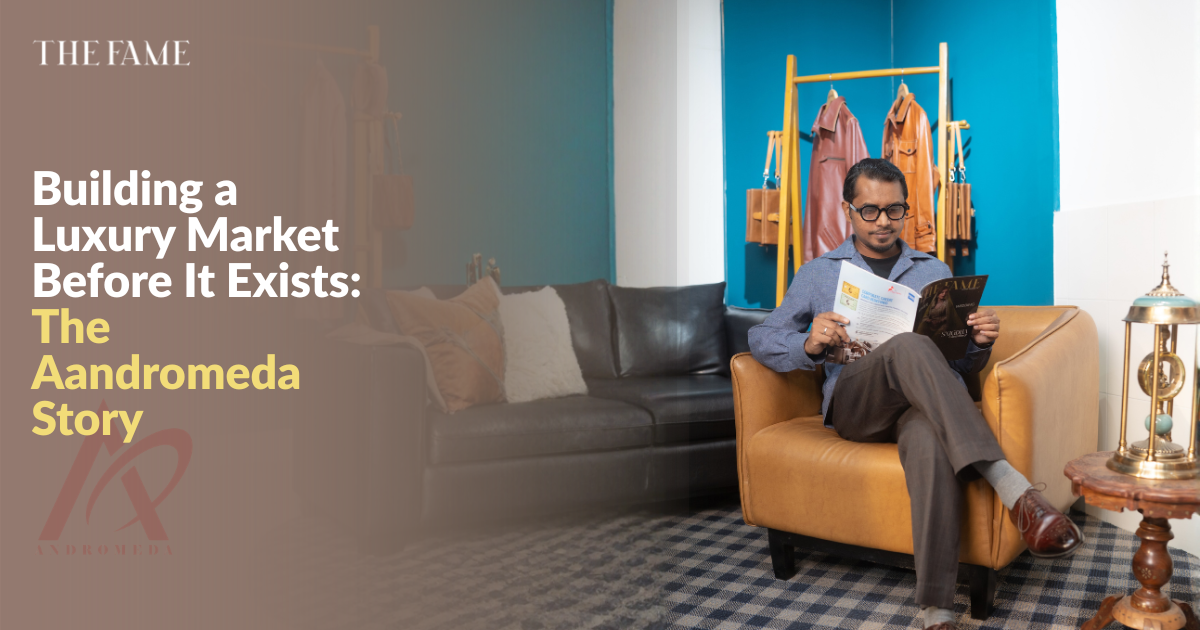
In emerging economies, most entrepreneurs focus on responding to existing demand. Few choose the more difficult path of creating demand where none visibly exists. For Aandromeda founder, that challenge became the foundation of an ambitious vision: establishing a true artisan luxury footwear brand in Bangladesh long before the market fully understood what handcrafted luxury footwear actually meant.
At a time when the local leather industry is dominated by mass-market production and commercially driven retail brands, Aandromeda is attempting something fundamentally different. The company is not simply selling shoes—it is introducing a new philosophy of craftsmanship, exclusivity, and experiential luxury.
“The local market still has a limited understanding of true artisanal craftsmanship and luxury shoemaking,” he explains. “There is certainly a need for it, but the demand remains relatively small because very few people have had the opportunity to experience what genuine handcrafted footwear truly represents.”
Rather than viewing this as a barrier, he saw it as an opportunity.
Creating a Category, Not Following One
The challenge facing luxury entrepreneurs in Bangladesh is not always competition. Often, it is education.
When consumers have spent decades associating footwear with utility, branding, or seasonal fashion trends, introducing the concept of handcrafted artisan shoes requires a different conversation altogether. Aandromeda’s strategy has therefore been centered around market development rather than conventional retail expansion.
Each pair of shoes can take between 40 and 45 days to complete, depending on its design and construction. The process involves skilled artisans whose techniques have been refined over years, and in many cases, generations.
“Our goal has never been simply to sell shoes,” he says. “It is to introduce people to a different standard—one where comfort, aesthetics, quality, and exclusivity can coexist in a single creation.”
That philosophy reflects a broader global shift within luxury industries, where consumers increasingly seek authenticity, craftsmanship, and meaningful ownership rather than mass-produced prestige.
From Consumer to Creator
The origins of Aandromeda are deeply personal.
A lifelong enthusiast of quality dressing and premium products, the founder spent years searching for footwear that met his expectations. While imported luxury brands occasionally offered that satisfaction, a defining moment came during his international travels, where he encountered handcrafted artisan footwear for the first time.
The experience transformed his understanding of luxury.
“I discovered a level of craftsmanship, character, and individuality that I had never seen before,” he recalls. “Every pair reflected the skill, patience, and artistry of the maker.”
Inspired by that discovery, he spent years attempting to collaborate with local manufacturers to recreate a similar standard in Bangladesh. Despite enthusiasm from industry partners, one challenge persisted: the lack of specialized artisan shoemaking expertise required to produce the exact quality and aesthetic he envisioned.
Rather than compromise, he expanded his search internationally, connecting with crafting houses and artisans who had preserved generations-old techniques. Those relationships eventually became the foundation upon which Aandromeda was built.
When Luxury Becomes Hospitality
One of Aandromeda’s most distinctive business decisions has been its rejection of traditional retail models.
Instead of maximizing foot traffic, the brand has chosen exclusivity and personalization.
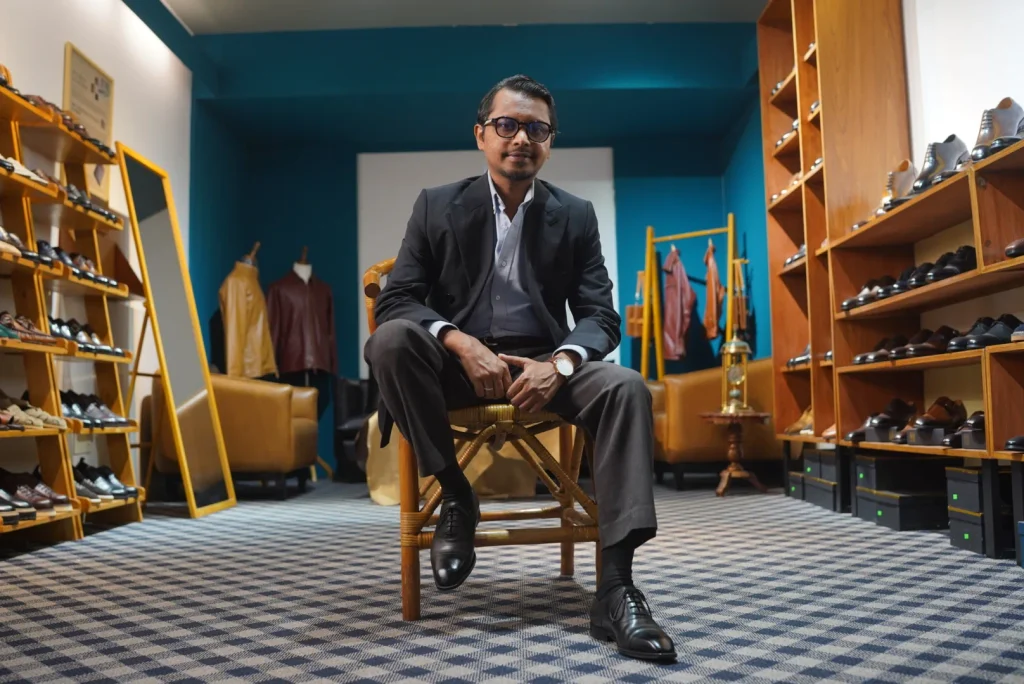
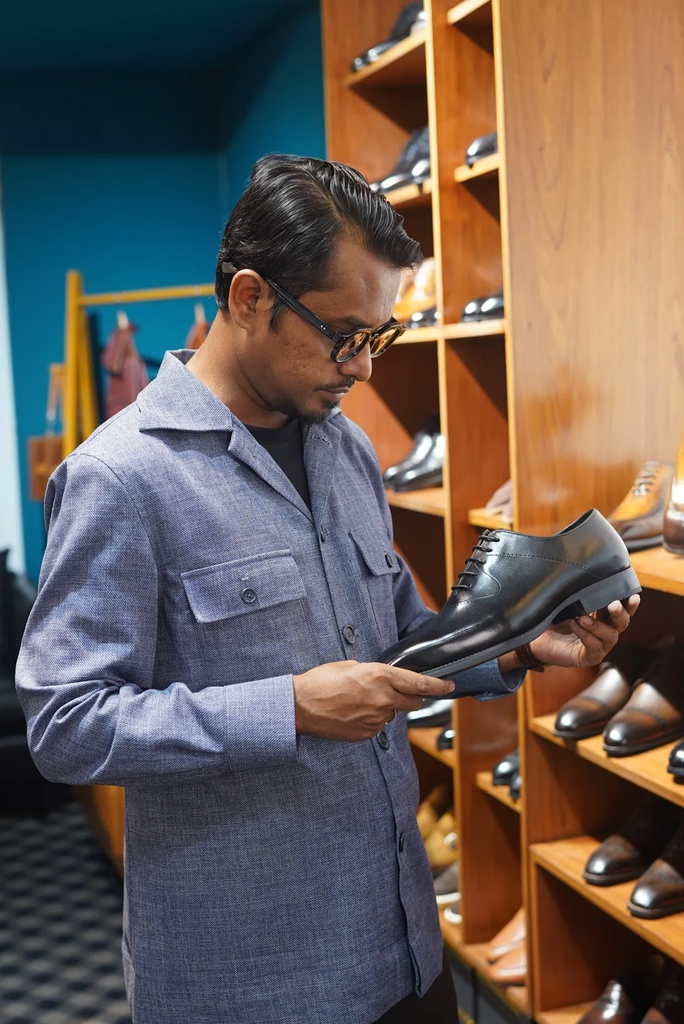
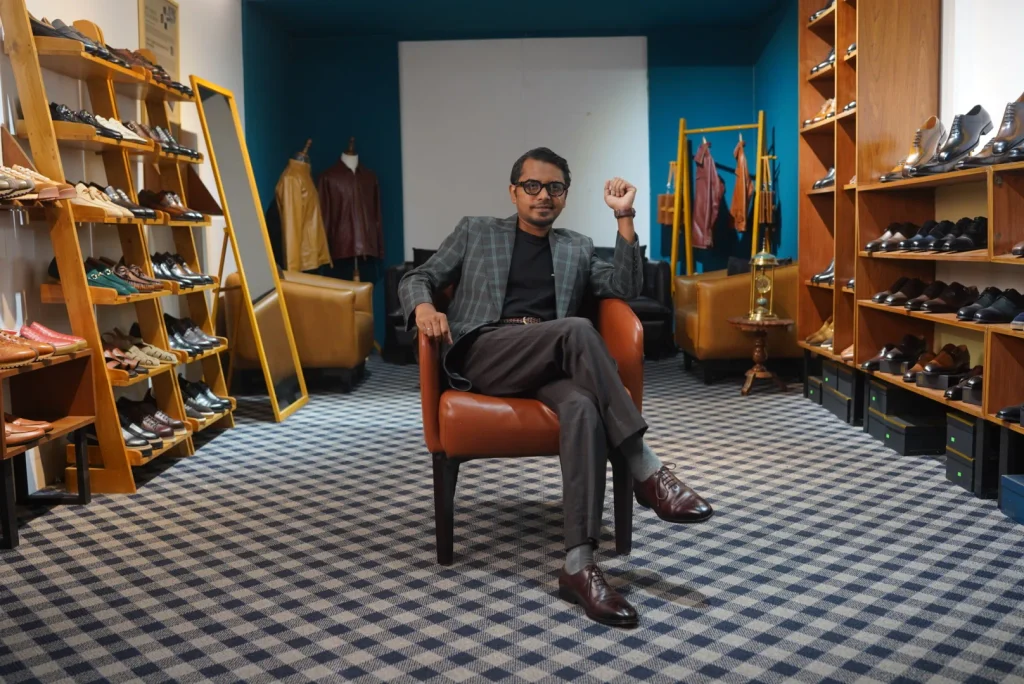
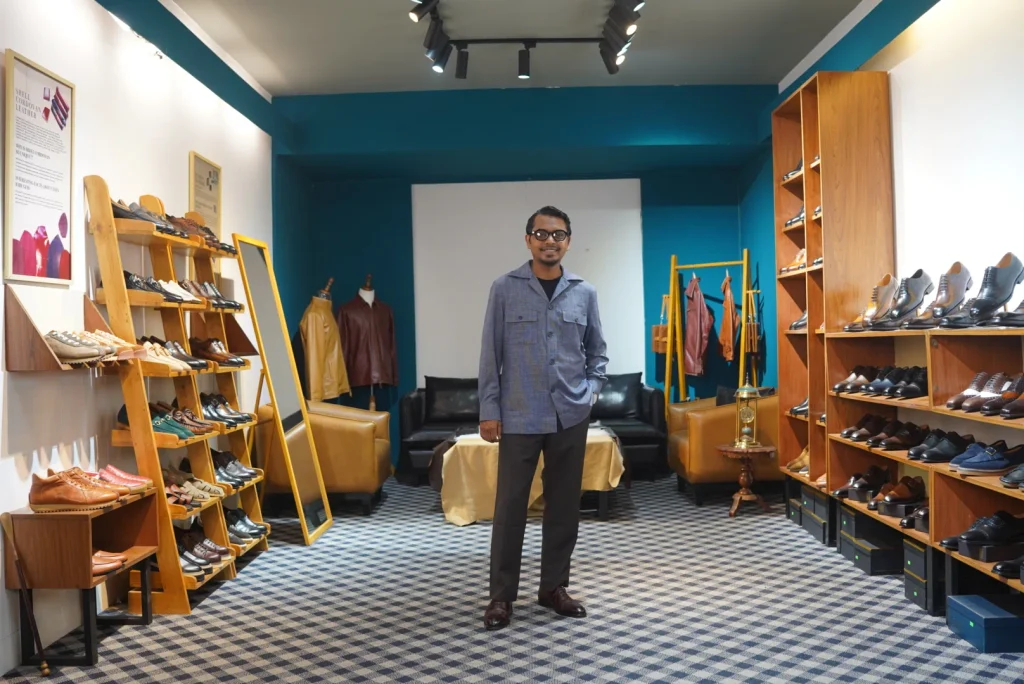
Its private experience center operates by appointment and accepts only three guests per day. The decision may seem counterintuitive from a conventional business perspective, but it reflects a deeper understanding of luxury consumer behavior.
According to the founder, luxury is frequently misunderstood in emerging markets.
“Many people associate luxury with grand interiors, expensive décor, and a sales representative guiding them through products,” he says. “Those elements may create an impression, but they do not necessarily create a luxury experience.”
At Aandromeda, clients are treated less like customers and more like invited guests. Conversations begin not with products, but with understanding the individual’s lifestyle, professional identity, and personal style preferences.
Guests are welcomed with refreshments, guided by fashion consultants, and introduced to the craftsmanship behind each creation. The focus remains on relationship-building rather than transaction-making.
“The experience is designed around conversation rather than transaction,” he explains. “Whether or not a purchase is made, our goal is for every guest to leave having experienced genuine hospitality and a deeper appreciation for craftsmanship.”
This approach mirrors strategies employed by some of the world’s leading luxury houses, where client experience often becomes as valuable as the product itself.
Lessons from Industry and Management
While Aandromeda operates within the luxury sector, its foundations are grounded in management discipline.
The founder’s academic background in Human Resource Management, combined with years of professional experience working with Japanese and German organizations, shaped his understanding of operational excellence.
Those environments exposed him to cultures where quality is not treated as a marketing slogan but as a measurable system.
“Excellence is rarely accidental,” he says. “It is built through systems, consistency, and attention to detail.”
His decade-long career as a management consultant further deepened his understanding of manufacturing and craftsmanship. Working across multiple industries, including leather and footwear, provided direct access to production floors, craftsmen, and the often unseen realities behind premium products.
The result is a business model that combines strategic management principles with a deep respect for artisan expertise—a combination rarely found in traditional fashion ventures.
The Business of Preserving Craftsmanship
At its core, Aandromeda is driven by a mission larger than footwear.
The founder repeatedly returns to one central idea: craftsmanship.
For him, craftsmanship represents something increasingly rare in a world dominated by automation, speed, and scale.
“Fashion trends come and go, but true craftsmanship remains timeless,” he says.
He describes handcrafted shoes as wearable art—objects that carry not only function and beauty, but also the story, skill, and identity of the people who create them.
“We admire paintings in galleries and sculptures in museums,” he says. “Shoes are unique because they bring art into everyday life. They are one of the few forms of craftsmanship that can accompany you through your daily journey while carrying the signature, skill, and story of the artisan who created them.”
That perspective has become central to the brand’s identity and long-term positioning.
Thinking Beyond Borders
Although Aandromeda remains a young brand, its ambitions extend far beyond Bangladesh.
The company is actively exploring franchise and expansion opportunities in several international markets, including the United Kingdom, France, Dubai, Singapore, Thailand, and the United States.
Yet growth, according to its founder, is not the ultimate objective.
The real goal is legacy.
Many of the world’s most respected luxury houses earned their status not through rapid expansion, but through decades of consistency, craftsmanship, and unwavering commitment to their values. Aandromeda hopes to follow a similar path.
“I believe Aandromeda has the potential to become an internationally recognized artisan luxury house,” he says. “If one day people around the world recognize Aandromeda as a respected artisan brand known for exceptional craftsmanship and timeless creations—and know that its story began in Bangladesh—that would be one of my greatest achievements.”
In many ways, Aandromeda’s journey represents a larger story about Bangladesh itself. As the country continues to evolve from a manufacturing economy into a creator of premium brands, businesses like Aandromeda are testing a bold proposition: that world-class luxury, rooted in craftsmanship and authenticity, can emerge from Bangladesh and compete on the global stage.
Whether that vision ultimately succeeds remains to be seen. But by choosing to build a luxury market before it fully exists, Aandromeda has already positioned itself as one of the more intriguing entrepreneurial experiments in the country’s evolving premium consumer landscape.
Photographs- Ahamed Zubayer