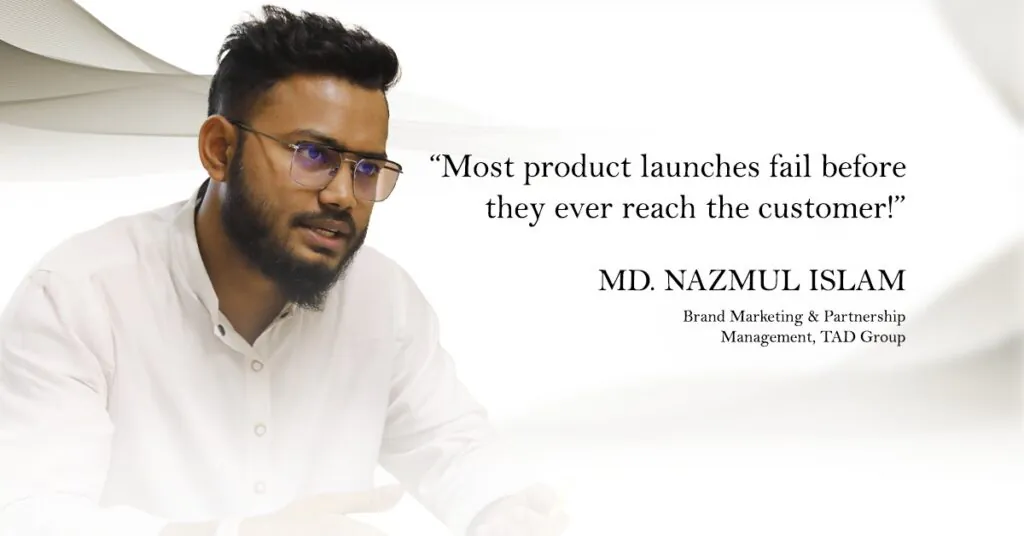
A new product without a strategy isn’t a launch it’s a gamble. And in today’s market, the odds aren’t in your favor.
According to Harvard Business School research, around 95% of new products fail each year. Not because the ideas were bad. Not because the teams weren’t talented. But because the launch was treated as a task rather than a strategy.
I’ve seen it happen repeatedly: a product that checks every internal box great design, solid functionality, competitive pricing lands in the market and disappears quietly. No traction. No ROI. Just a line item on a post-mortem report. NO ONE KNOWS WHY, & PEOPLE DON’T THINK ABOUT THE REASONS.

So what separates the launches that actually work?
- What is the customer actually willing to pay? Not what we hope for—what the data says.
- How are existing competitors performing? Benchmarking against real sales data, not assumptions.
- Does the math actually work? Marketing + distribution costs measured against a realistic revenue ceiling.
- Most teams skip or rush this step, which they should not. They build the product, then try to find the market. The most successful launches reverse that order entirely.
Timing is a variable, not a constant
Even a well-researched product can fail if it enters the market at the wrong moment. Seasonality, competitor activity, consumer sentiment shifts these aren’t excuses; these are facts. They’re inputs that belong in your launch plan.
The right product, launched at the wrong time, to an unprepared audience, is still the wrong launch, which becomes a disaster for the brand/company.
The brands growing sustainably aren’t the ones with the most innovative products. They’re the ones that consistently ask, “Is now the right moment and do we have the data to back that answer?” The answer always remains silent.
The mindset shift that changes everything
Treating every product launch as a capital allocation decision will increase your success rate. You are deploying resources, time, money, and brand equity into a market bet. And like any investment, it deserves due diligence.

When teams start asking, “What’s our expected ROI before we build?” instead of “How do we sell what we built?” that’s when launches stop being expensive experiments and start becoming growth engines. It should be the only process before launching any product in the market.
Every step in your pre-launch process exists for a reason. Skipping even one whether it's the P&L analysis, the competitive benchmarking, or the timing assessment is where brands quietly lose money and momentum. Sustainability isn't built at the launch event. It's built in the weeks and months of preparation that nobody sees.Photographs- Courtesy