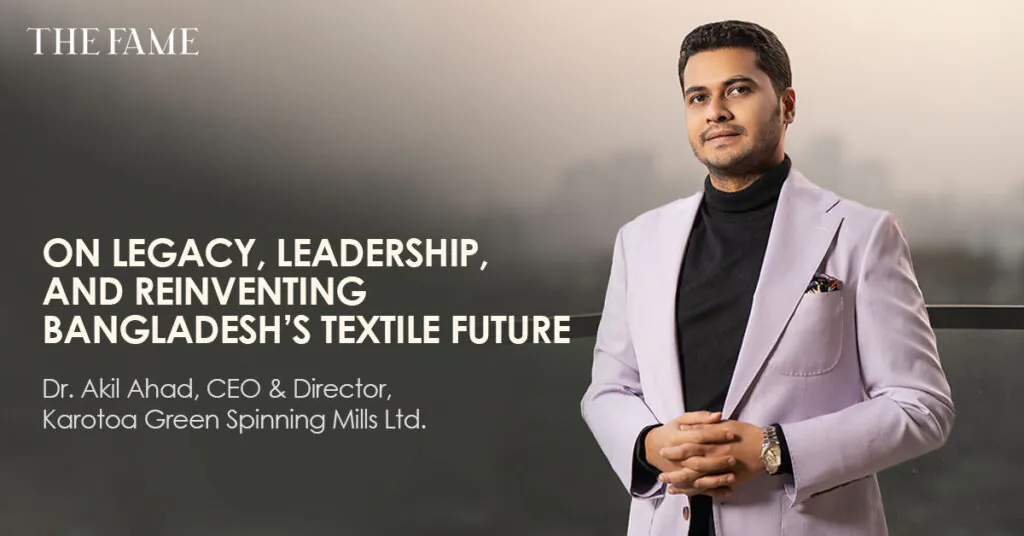
Bangladesh’s textile sector has long been built on legacy businesses, but a new generation of leaders is redefining how those legacies evolve. Among them is Dr. Abdul Ahad Akil, CEO and Director of Karotoa Green Spinning Mills Ltd., an entrepreneur who represents the emerging face of next-generation industrial leadership.
Akil began his career in 2007 as a trainee at Tara Spinning Mills Ltd., learning the textile industry from the ground up before moving into leadership roles across the family’s spinning businesses. Over the years, he served as Director at Karotoa Spinning Mills Ltd. and later Deputy Managing Director of Enayetpur Spinning Mills Ltd., gradually shaping his own leadership style within a 37-year family legacy in textiles.
Today, Akil is leading one of the sector’s most ambitious sustainability projects—an eco-friendly yarn manufacturing complex in Gazipur designed to align with global environmental standards while creating employment and strengthening Bangladesh’s textile value chain.
Beyond textiles, he has also ventured into fashion with the brand Lend Fashion and technology through Prekite Technologies, reflecting a broader vision of building a diversified and future-ready business ecosystem.
As part of our Next Gen Business Issue, Dr. Akil shares insights on leadership, sustainability, industry challenges, and the aspirations shaping the next chapter of Bangladesh’s industrial growth.
Q&A
Learning Leadership from the Ground Up
You began your journey in the textile sector as a trainee in 2007. Looking back, what were the defining moments that shaped you into the leader you are today?
I started my journey in the textile sector as a trainee in 2007, which gave me the opportunity to learn the industry from the ground level. Those early years were extremely important because I was able to understand every stage of the process—from production to management.
Working closely with experienced professionals and observing the challenges of the industry helped me develop discipline, patience, and a strong sense of responsibility.
One of the defining realizations in my journey was understanding that leadership is not only about making decisions, but also about supporting people and building a strong team. The textile sector is highly competitive and constantly evolving, so adapting to change and continuously learning has always been essential.
Another key influence has been the legacy and guidance of my family, who have long been involved in this industry. Their experience and values inspired me to work harder and think about how we can modernize the business while preserving its tradition.
Looking back, the combination of hands-on experience, mentorship, and a commitment to continuous improvement has played a significant role in shaping me into the leader I am today. Each challenge has been a learning opportunity, and that mindset continues to guide me in my professional journey.

Balancing Legacy with Innovation
Carrying forward a 37-year family legacy is both an honor and a responsibility. How do you balance tradition with your own vision for innovation?
Carrying forward a 37-year family legacy is truly a matter of pride for me, but it also comes with a deep sense of responsibility.
The foundation that my family built over the years is based on hard work, trust, and strong relationships in the textile industry. Preserving those values is very important because they are the reason the business has sustained and grown for so long.
At the same time, every generation has the responsibility to move the business forward. My approach has been to respect the traditional strengths of our operations while introducing new ideas and modern practices. This includes improving efficiency, adopting better technology, strengthening management systems, and exploring new markets.
For me, innovation does not mean replacing tradition. Rather, it means building on that strong foundation and adapting it to the needs of today’s world.
Sustainability as the Industry’s Future
Karotoa Green Spinning Mills is pursuing global sustainability benchmarks, including LEED certification. How important is sustainability in the future of Bangladesh’s textile industry?
Sustainability is becoming increasingly important for the future of Bangladesh’s textile industry.
As global buyers and consumers become more environmentally conscious, they expect manufacturers to adopt responsible and sustainable practices. For Bangladesh, which is one of the world’s leading textile and apparel producers, focusing on sustainability is essential to remain competitive in the global market.
At Karotoa Green Spinning Mills, we are currently working toward internationally recognized standards such as LEED Certification. Our goal is to gradually align our operations with global sustainability benchmarks by improving energy efficiency, reducing environmental impact, and ensuring a safer and healthier working environment for our employees.
Sustainability is not just about certification—it is about building an industry that is responsible, future-ready, and capable of maintaining its strong position in the global textile market.
Reviving Bangladesh’s Spinning Industry
The sector is facing rising dollar rates, energy shortages, and shrinking mill numbers. What structural reforms do you believe are necessary to stabilize and revive the spinning industry?
The spinning industry in Bangladesh is currently facing several significant challenges, including rising dollar exchange rates, energy shortages, and increasing production costs. These factors have created considerable pressure on many mills, and as a result, we are seeing the number of operational spinning mills gradually decline.
First, ensuring a stable and reliable energy supply is critical. Spinning mills are highly dependent on uninterrupted electricity and gas. Any disruption increases production costs and reduces efficiency.
Second, financial support and policy stability are essential. Many mills are struggling with high interest rates and currency fluctuations due to the rising dollar. Access to more favorable financing and a stable foreign exchange environment would help businesses plan and operate more confidently.
Finally, encouraging modernization and technological upgrades will be key to long-term sustainability. Mills that invest in modern machinery, automation, and efficient production systems will be better prepared to face global competition.
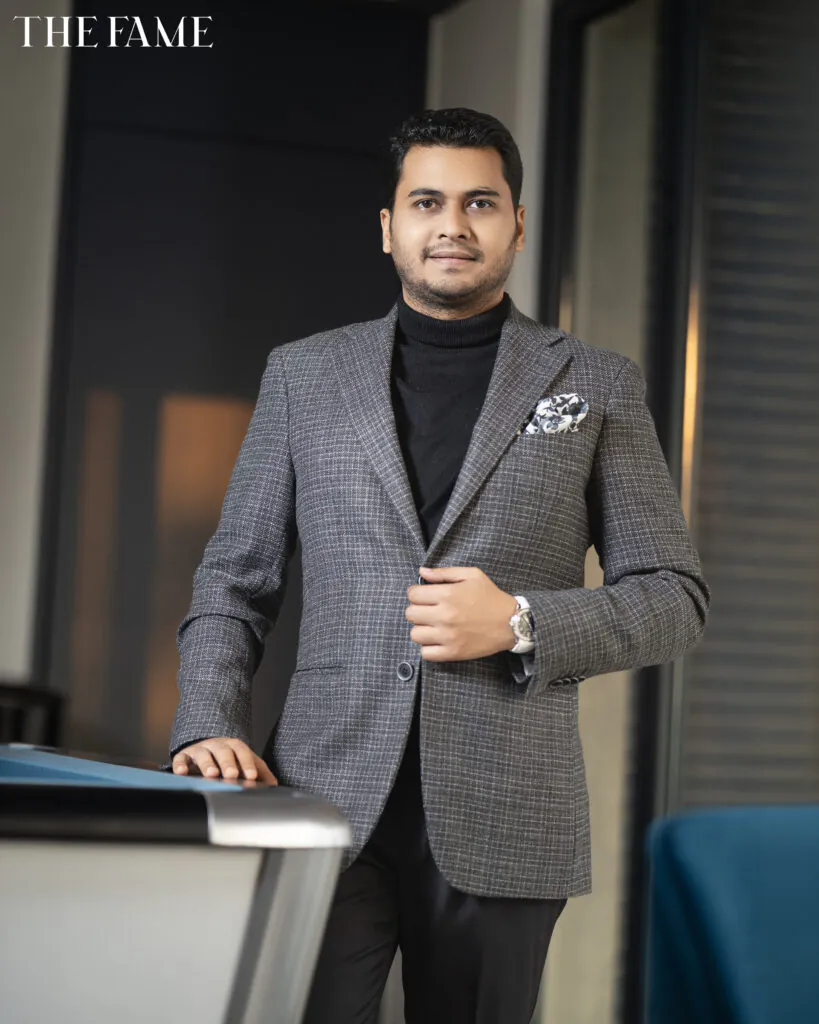
Building Resilience in an Energy-Challenged Industry
Energy disruptions remain a major operational challenge. How are you building resilience within your business to navigate these uncertainties?
Energy disruptions have indeed become one of the most significant operational challenges for the spinning industry.
At our mills, we are working to strengthen operational flexibility so that production can continue as smoothly as possible even during uncertain energy conditions. This includes improving internal planning, optimizing machine utilization, and closely monitoring energy consumption to ensure that available resources are used as efficiently as possible.
We are also investing in more energy-efficient technologies and modern machinery that reduce power consumption while maintaining productivity.
Putting Workers at the Center of Growth
Your factory campus is uniquely designed with open spaces, recreation facilities, and worker amenities. How does employee well-being factor into your long-term business strategy?
Employee well-being is a very important part of our long-term business strategy.
In an industry like textiles, the strength of a company ultimately depends on the people who work there every day. When employees feel respected, comfortable, and motivated, it naturally reflects in their productivity and commitment.
We have tried to create an environment that is not only functional for production but also supportive of the people working there. Open spaces, recreational areas, and proper worker facilities help create a more positive workplace.
For us, sustainable growth is not only about machines and production capacity. It is also about building a workplace where people can work with dignity, motivation, and a sense of belonging.
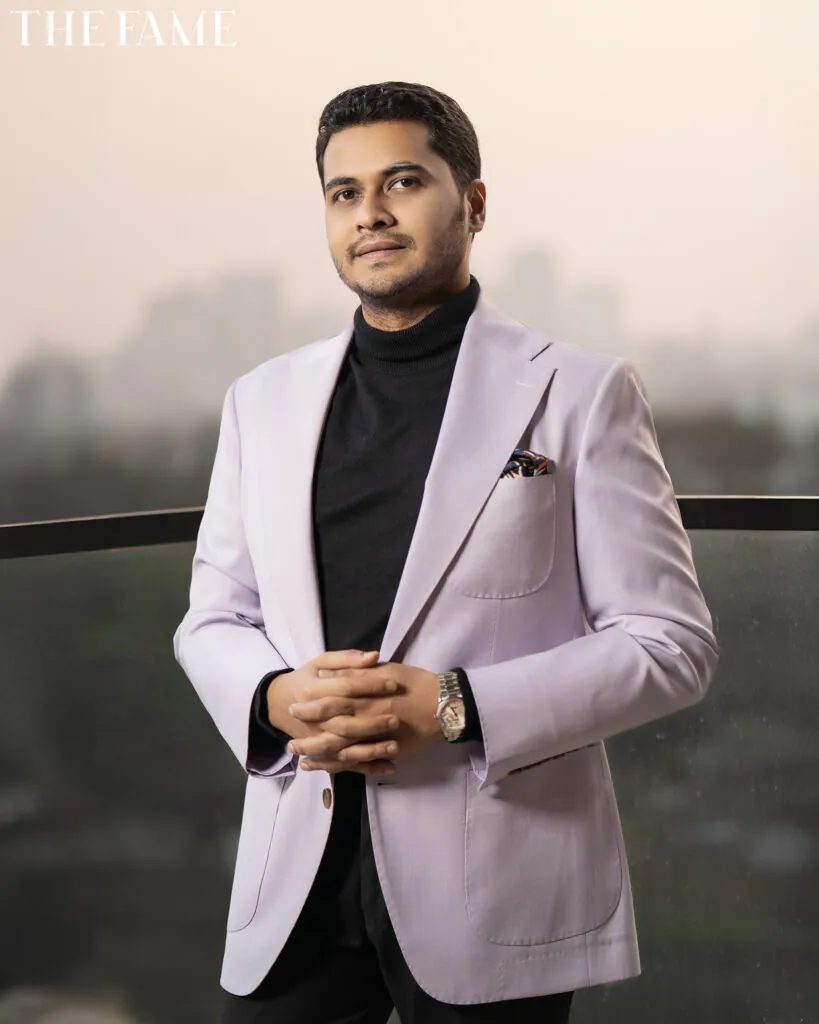
Expanding Beyond Textiles
You have expanded from textiles into fashion with Lend and technology through Prekite Technologies. What drives your cross-industry diversification strategy?
My decision to expand into sectors such as fashion and technology comes from the belief that businesses must evolve with changing times.
While textiles remain the foundation of our family legacy, I also see opportunities in other industries that are shaping the future.
Through Lend, my goal has been to connect traditional textile knowledge with modern fashion and lifestyle products. At the same time, with Prekite Technologies we are exploring how digital solutions can improve efficiency and business processes.
Diversification allows us to build a balanced business ecosystem where traditional industries, modern brands, and technology can support and strengthen each other.
Technology, Transparency, and Consumer Trust
Bangladesh’s tech sector is growing rapidly but faces challenges like counterfeit products and market trust. How can technology reshape consumer confidence and industrial transparency?
Technology can play a major role in rebuilding consumer confidence by creating traceability and authenticity in products.
Digital verification systems, QR-based authentication, and blockchain-supported tracking can help customers confirm the origin and authenticity of products.
When consumers can easily verify whether a product is genuine, their trust in brands naturally increases.
Staying Competitive in the Global Market
With global buyers watching Bangladesh closely, what must the country do to remain competitive in an evolving international market?
Bangladesh must focus on strengthening efficiency, sustainability, and value addition across the textile and manufacturing sectors.
Investing in modern technology, automation, and efficient production systems will be essential to increase productivity and maintain consistent quality.
Equally important is sustainability. International brands are increasingly prioritizing environmental and social compliance.
With the right balance of modernization, sustainability, and supportive policies, Bangladesh can continue to grow as a trusted and competitive player in the global textile industry.
Reputation vs Revenue in the Digital Era
You are deeply invested in brand building. In the digital age, how important is reputation compared to revenue?
In the digital age, reputation is just as important as revenue—and in many ways it comes first.
Revenue reflects the success of a business at a particular moment, but reputation determines whether that success can be sustained in the long run.
A strong reputation builds trust, and trust is the foundation of any successful business.
A Global Perspective on Leadership
Having studied in Bangladesh, Germany, and the Czech Republic, how has international exposure influenced your leadership philosophy?
Studying in Bangladesh, Germany, and the Czech Republic gave me a diverse perspective on leadership and management.
Each environment exposed me to different approaches, work cultures, and ways of solving problems.
These experiences helped me develop a leadership style that values both discipline and empathy, strategy and execution.
Advice for the Next Generation
What advice would you give to young entrepreneurs who want to enter manufacturing or technology today?
My advice to young entrepreneurs is to be clear about your vision and stay committed to continuous learning.
Both manufacturing and technology are demanding sectors—they require patience, resilience, and strong problem-solving skills.
Equally important is building a trustworthy team and fostering a culture of integrity. Persistence, discipline, and a long-term perspective often make the difference between short-lived success and lasting impact.
Building a Legacy Beyond Business
Beyond business growth, what personal legacy do you hope to create over the next decade?
Beyond business growth, I hope to create a legacy that reflects responsibility, innovation, and positive impact on both people and the community.
I want to be remembered as someone who not only expanded businesses successfully but also uplifted those around me—employees, partners, and local communities.
Ultimately, the legacy I aspire to is one of creating opportunities, fostering growth, and leaving systems and structures in place that continue to benefit people long after I’m directly involved.
Photos – Eivan Sardar
Outfit Sponsor Zaiyan Bespoke