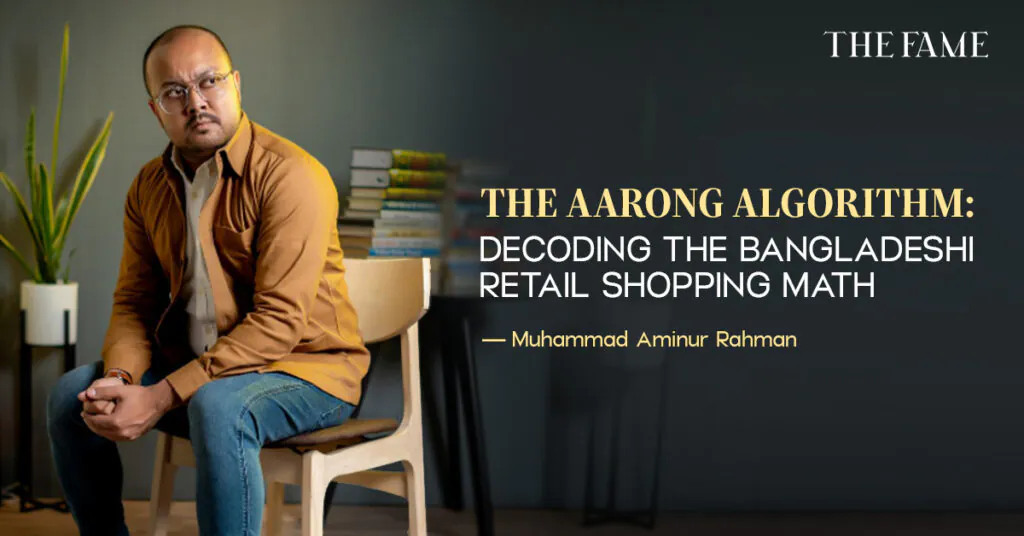
By Muhammad Aminur Rahman
In the arena of Bangladeshi commerce, Aarong is often sentimentalized as the “soul of the nation.” We wrap it in the warm language of heritage and “Deshi love.” But strip away the sandalwood scent and the kantha stitching, and you’ll find a cold, high-performance engine of Retail Mathematics and Data-Driven Psychology.
Aarong isn’t just selling a lifestyle; they are dominating an ecosystem through a sophisticated playbook that leaves most competitors in the dust. Here is how the BRAC venture engineered its way to the top.
The Science of the “Store-First” Experience
Aarong’s dominance begins with the Inventory Turnover Ratio. In the world of high-stakes retail, a product sitting on a shelf is a liability. Aarong treats its floor space like a living laboratory, tracking Footfall vs. Conversion Rates with surgical precision.
To the management, you aren’t just a shopper; you are a Data Point. By analyzing Dwell Time, the exact duration you spend in front of a specific display, they identify which “hot zones” drive revenue and which “cold zones” need a reset. If you notice the store layout feels slightly different every few months, it isn’t for aesthetics; it is a calculated move to break “shelf blindness” and force your eyes to see new products.
The High-Margin Anchor and the Volume Tail
One of Aarong’s most brilliant maneuvers is its balance of High-Margin vs. High-Volume goods. As you enter, you are greeted by “Anchor Products” intricate, high-ticket sarees or artisanal home decor. These items carry massive profit margins, yet they aren’t expected to fly off the shelves every hour.
Their true purpose? To set a “Price Anchor” and elevate the brand’s prestige. While you may hesitate at a 10,000 BDT saree, you’ll almost certainly pick up a 500 BDT handwash or a pair of earrings on your way out. This ensures a consistent Average Transaction Value (ATV), turning every visitor into a contributing unit of revenue.
Merchandising the “Impulse”
Data reveals a powerful psychological trigger in local shopping: a woman purchasing a Kamiz is 70% more likely to purchase accessories if they are within arm’s reach. Aarong leverages Cross-Category Merchandising to perfection.
They don’t just sell clothes; they sell completed looks. By placing jewelry next to outfits and sandals near the Panjabi section, they trigger Impulse Buying. They effectively move the customer from a “specific need” (buying one item) to a “lifestyle upgrade” (buying the whole set), a strategy known in the industry as Basket Expansion.
The DTC Advantage: Cutting the Middleman
Aarong’s supply chain is a case study in Vertical Integration. With 87,000+ artisans under the BRAC umbrella, Aarong operates a Direct-to-Consumer (DTC) model that is nearly impossible to replicate.
By eliminating wholesalers and distributors, they claw back 15-20% in margins that would typically be lost to middlemen. This “found money” is what allows Aarong to secure the most expensive real estate in the country and invest in a premium packaging experience that justifies their price point.
The Loyalty Loop and the Upsell
Through the My Aarong Rewards program, the brand sits on a goldmine of consumer behavior. They don’t just know what you buy; they know when you are likely to buy it again. By calculating the Customer Lifetime Value (CLV), they can push personalized SMS and email triggers that bring you back into the store right as your seasonal wardrobe needs a refresh.
Once you’re back, the staff takes over with a masterclass in Upselling. Instead of the aggressive “buy more” approach, they offer “complements.” If you’ve selected a 2,000 BDT Panjabi, an additional piece of footwear feels like a minor yet necessary addition. It’s the art of making the customer feel curated, rather than sold to.
The Architecture of Risk
However, this titan isn’t without its Achilles’ heel. Aarong’s model is incredibly Capital Intensive. Unlike lean e-commerce startups, Aarong carries massive overhead, prime rents, high-voltage utility, and a small army of staff.
Furthermore, managing thousands of SKUs (Stock Keeping Units) across various colors and sizes requires an ERP (Enterprise Resource Planning) system that cannot afford to fail. A 1% error in inventory tracking doesn’t just mean a missed sale; it results in “Dead Stock” that eats away at the bottom line.
The Verdict
The success of Aarong serves as a masterclass for the Bangladeshi business community. It proves that while Emotion gets a customer through the door, only Hardcore Data and Logistics keep the lights on.
They have successfully bridged the gap between a traditional craft shop and a modern retail powerhouse, creating the nation’s most formidable Omni-Channel Strategy.
In the end, Aarong’s secret sauce is simple yet lethal: They provide you the heritage of the past in the form of sales using the math of the future.
Regards
M Aminur Rahman
CEO & Chief Photographer, Checkmate Events
Lecturer, Department of Business Administration, University of Scholars
Founder & Lead Facilitator, Transcendence Workshops
Photograph- Courtesy