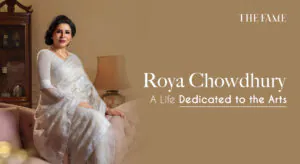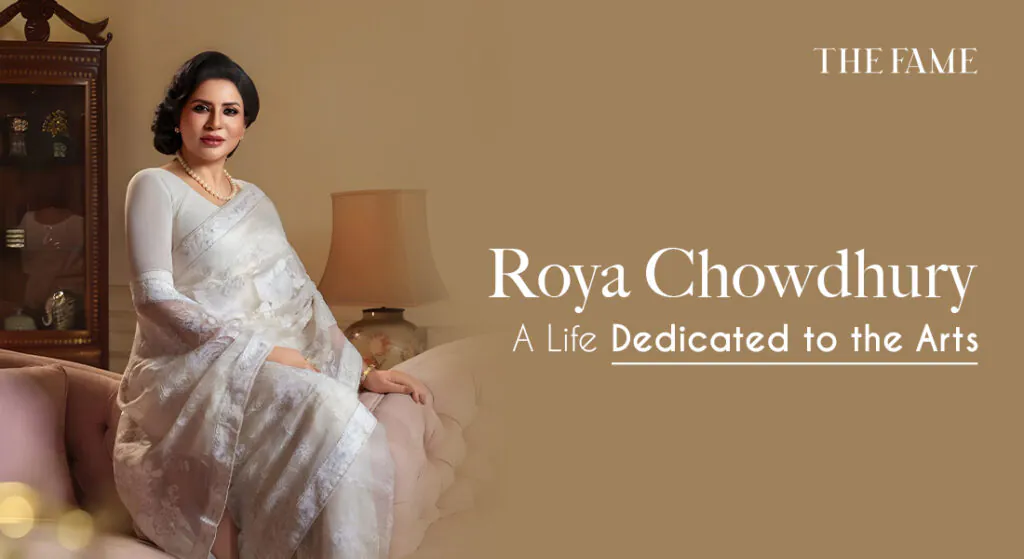
With a voice that hums like the depths of the sea, recitation artist Roya Chowdhury has spent two decades breathing life into poetry. In this intimate conversation, she reflects on her lifelong bond with the arts, the poets who shaped her sensibility, and how she is using both stage and digital platforms to introduce a new generation to the quiet magic of spoken verse.
Roya Chowdhury has a unique voice. Not the kind poets lazily compare to the breaking of glass bangles or the chirping of a songbird. Hers moves differently deeper, slower, more elemental. It hums like something rising from the floor of an ocean. Mystic, mellow, almost meditative in its softness.
Listening to her feels like watching ice melt under the first shy ray of a winter sun. Or hearing a single leaf surrender to the forest floor in the quiet ushering of autumn. The sweetness in her voice does not strike the mind with force; it slips gently through the senses, lingering, urging you to listen again.
But did that voice alone lead her to become a recitation artist? Not quite.
For Roya, art was never an acquisition; it was an inheritance. She grew up in a family where artistic curiosity was cherished, where beauty whether in words, music, or objects was preserved like something sacred. “Art was always around me,” she recalls. “In my family, creativity wasn’t treated as a luxury. It was simply part of how we lived.”

Life, of course, had its own script.
Marriage, motherhood, and a life that involved constant travel filled her days with responsibility and movement. Yet even amid that whirl, the thread of art never truly loosened. Wherever she went be it London, New York, Tokyo, Dhaka, or Delhi her eyes instinctively searched for quiet corners where art lived and breathed.
Museums, bookstores, cultural spaces she gravitated toward them all. “Travel never distracted me from art,” she says with a gentle laugh. “If anything, it made me crave it more. Every new place felt like another doorway to creativity.”
And then, one day, she made a decision that felt both sudden and inevitable.
She would step into the world of recitation not casually, but with purpose.
“My love for poetry goes way back,” Roya says as we sit in her serene DOHS residence, a space adorned with artworks and artifacts gathered from her travels around the world. “I have always believed that recitation is a form of acting. Just like actors breathe life into a script on screen, a reciter must step inside the soul of the poem.”
For her, reading a poem aloud is not merely performance; it is inhabitation.
“When I approach a poem,” she explains, “I try to dive as deeply as I possibly can into the poet’s world. Into the emotions between the lines, the silences inside the words. Poetry has a strange magic over me I almost inevitably fall in love with every piece I recite.”
Perhaps that is why choosing a single favorite poem proves nearly impossible for her.

“I truly love every poem I have recited,” she says thoughtfully. “But when it comes to poets, I naturally return to the masters.” Among them are two towering figures of Bengali literature: Rabindranath Tagore and Jibanananda Das.
“Tagore is a timeless classic someone every reciter must revisit again and again,” Roya reflects. “And Jibanananda Das… he is something else entirely. Abstract, mythical, hauntingly beautiful. His poetry carries a quiet melancholy that always surprises you.”
Yet poetry, for Roya, is inseparable from the stage.
The energy of a live audience the silent anticipation in the room, the collective breath of listeners creates an atmosphere no recording can replicate. “The stage is where I feel my fullest self,” she admits. “There is an exchange of energy that happens between the artist and the audience. Their eyes, their silence, their applause it all becomes part of the performance.”
Over the past two decades, that stage has welcomed her many times. Each performance has deepened her bond with poetry and strengthened her identity as a recitation artist.
But the world has changed, and so has the stage.
Today, Roya has embraced digital platforms with surprising enthusiasm, using them to reach listeners far beyond the walls of auditoriums. “Digital media allows me to connect with an entirely new generation,” she says. “Many young people today haven’t had the chance to experience poetry the way many of us did growing up.”
Through carefully crafted recitation videos, she hopes to change that.
“I want them to discover the pure elixir of poetry,” she says with quiet conviction. “Once someone truly feels the beauty of words the rhythm, the emotion, the imagery there’s no turning back.”
Does she see herself mentoring young enthusiasts someday?
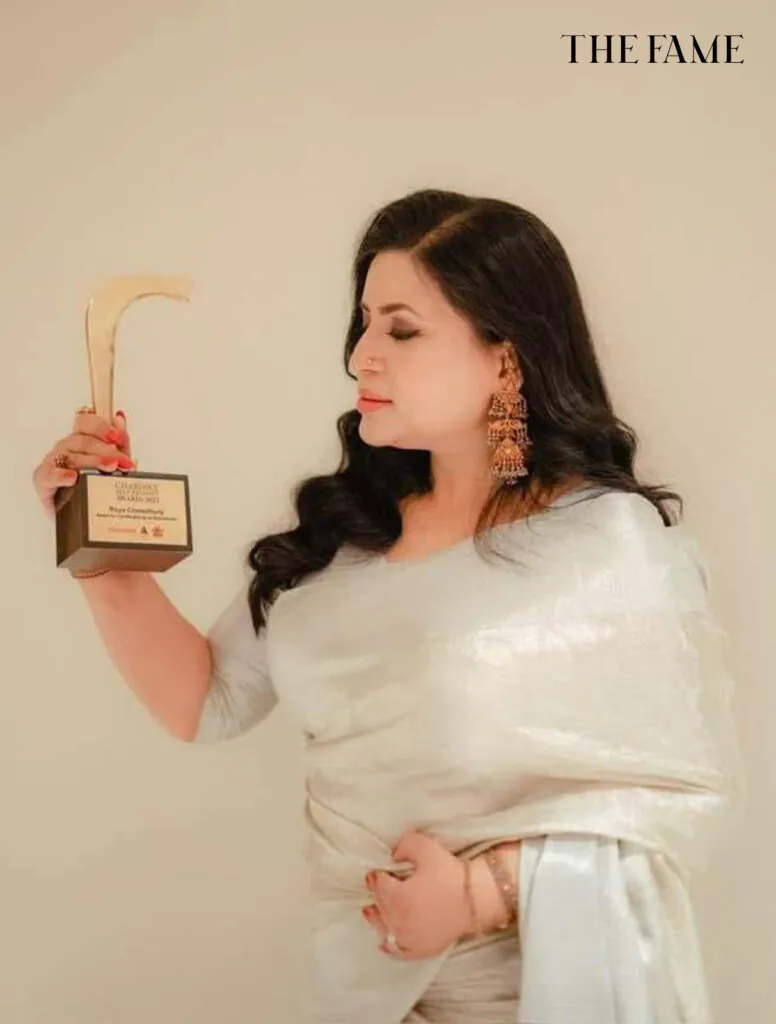
“Absolutely,” she answers without hesitation. “I want to open a doorway for them a new world where language becomes music and meaning becomes emotion. Poetry has so much to give. All it needs is a listener willing to pause.”
Looking back at her journey, Roya carries no trace of regret only gratitude.
“I have lived a content life,” she says softly, the calm assurance in her voice echoing the same gentleness that defines her performances. “Now that many responsibilities have eased, I want to dedicate more of my time to promoting the arts whatever form they may take.”
Recitation, for her, is not just expression; it is healing.
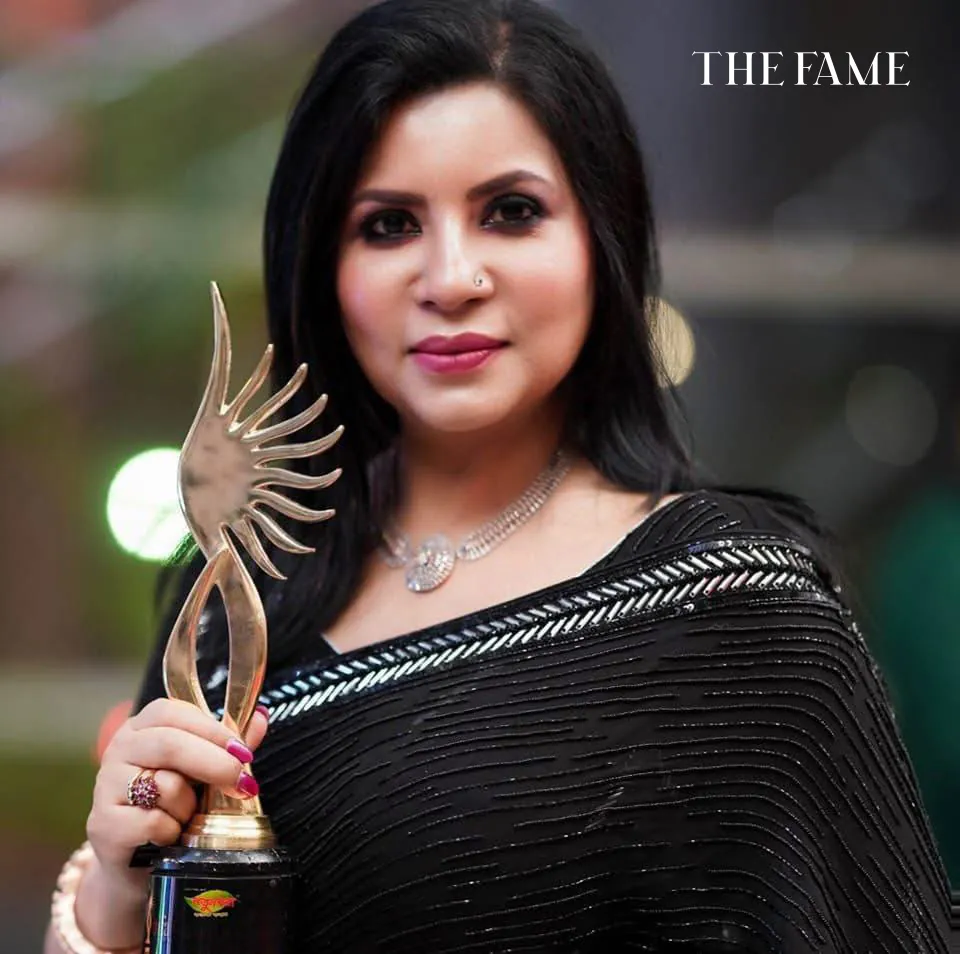
“If my voice can bring even a moment of calm to a tired mind,” she says, “if the beauty of words can soothe someone who is struggling then I will feel that my work has meaning.”
And with that ocean-deep voice, that quiet devotion to poetry, and a heart that continues to chase art wherever it lives, Roya Chowdhury seems destined to keep pursuing that purpose one poem, one breath, one listener at a time.