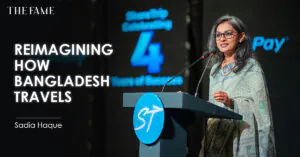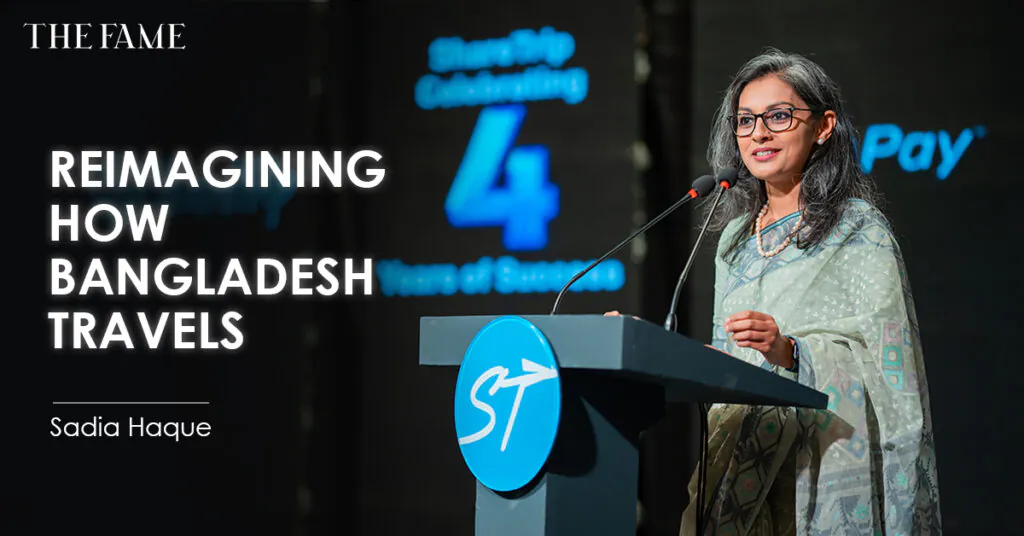
Sadia Haque on building a digital travel ecosystem for the next generation
As Bangladesh’s digital economy continues to evolve, few sectors have transformed as rapidly as travel and tourism. At the forefront of this shift is ShareTrip, a homegrown travel-tech platform that has redefined how Bangladeshis plan, book, and experience travel.
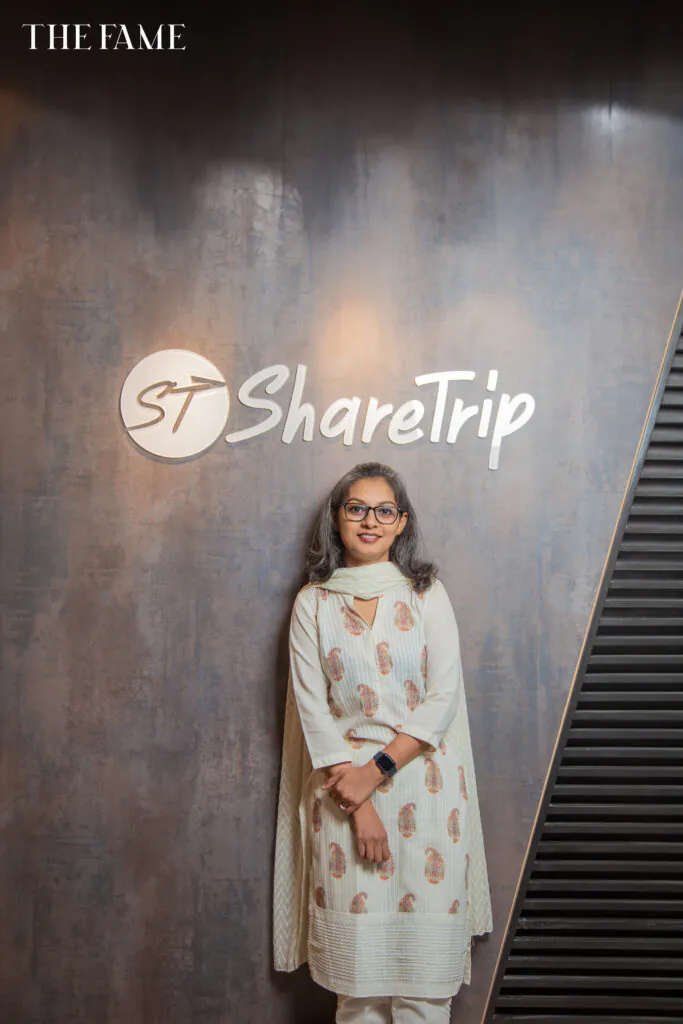
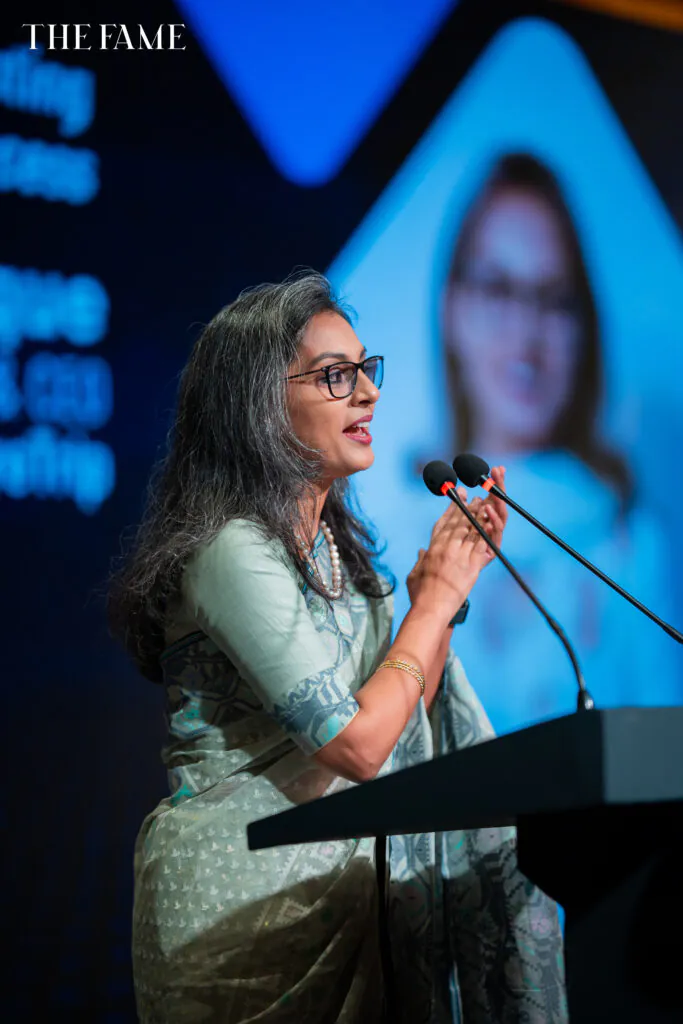
Leading that transformation is Sadia Haque, co-founder and CEO of ShareTrip, who left a successful corporate career spanning telecommunications, media, and technology to build one of the country’s most prominent digital travel platforms. Under her leadership, ShareTrip evolved from a three-person startup into a major player in Bangladesh’s digital travel ecosystem, becoming the first travel startup in the country to achieve Superbrand recognition and surpass one million app downloads.
Today, ShareTrip is more than an online booking platform it is positioning itself as the digital backbone of Bangladesh’s travel industry, connecting travellers, agents, airlines, and hotels through technology. In this conversation with The Fame Magazine, Sadia Haque reflects on the entrepreneurial journey behind ShareTrip, the changing landscape of travel in Bangladesh, and how the next generation of technology-driven businesses can reshape entire industries.
What inspired you to start ShareTrip, and how did you identify gaps in Bangladesh’s travel market?
ShareTrip grew from a shared passion for travel and firsthand experiences that highlighted a clear gap in Bangladesh’s travel landscape. During our own journeys, it became evident that travellers lacked a simple, one-stop solution. Existing platforms were fragmented, often inconvenient, and failed to deliver a seamless and transparent booking experience.
This revealed a significant white space for a fully integrated digital travel platform. With that vision, ShareTrip was created to digitise and simplify travel booking for Bangladeshi travellers, offering the convenience, transparency, and efficiency that the market had long been missing.
During the initial stages, what were the most significant challenges, and how did you overcome them?
In the early stages, the challenge was not just digitising an offline industry, but fundamentally changing how people booked travel. The new way of booking travel didn’t simply need to be slightly better it had to be meaningfully better.
We focused on bringing structure, transparency, and clarity to a process that was traditionally complex and opaque, while communicating openly with customers at every step. Having an in-house tech team, learning from global examples, and constantly listening to customer feedback allowed us to adapt the product to local realities rather than expecting customers to adapt to foreign models.
Building strong partnerships with banks, airlines, hoteliers, and financial institutions was also critical, as it helped establish credibility and trust for customers spending their money online.
Were there moments when the idea seemed uncertain, and what kept you motivated?
There were moments when the market wasn’t fully ready, particularly due to regulatory limitations and the absence of established digital models. The pandemic was a turning point.
It revealed that the need for digital transformation extended beyond travellers to the entire ecosystem—from offline travel agents to hoteliers who urgently needed online access to survive. That moment clarified that we weren’t just building a travel platform; we were helping shape the future infrastructure of the industry.
That understanding gave the mission greater purpose and strengthened our commitment to the long-term evolution of travel in Bangladesh.

Fundraising can be difficult for startups. How did you approach investors?
We focused on engaging investors through honest conversations supported by data and real market insights. Rather than presenting ShareTrip as just an idea, we shared a comprehensive story—highlighting the scale of the opportunity, early traction, the strength of the founding team, and a realistic roadmap for execution.
We also emphasised our long-term vision: building a scalable digital travel backbone for Bangladesh and beyond. Investors are always looking for founders who understand the market deeply and remain open to feedback. Demonstrating a grounded approach to finance, customer acquisition, and technology helped build the confidence needed to secure early-stage support.
Looking back, what would you have done differently while scaling the business?
Scaling operations and managing capital through periods of uncertainty was never straightforward. The pandemic, geopolitical tensions, and local disruptions created shocks that forced us to rethink assumptions and adapt quickly.
We introduced automation and data-driven processes early, which helped us scale efficiently. However, in retrospect, we could have accelerated these capabilities further and moved faster to build digital platforms for hoteliers and travel agents.
External macroeconomic factors such as shifts in the global investment climate also required careful strategic adjustments that could have been addressed earlier.
As a female founder in Bangladesh, did you face gender-related biases?
There were moments when subtle biases surfaced, as they often do in traditionally male-dominated industries. However, I chose to approach these situations with professionalism and focus rather than confrontation.
By grounding discussions in performance, data, and results, those initial perceptions gradually shifted. I was fortunate to have strong support from my co-founder and husband Kashef, along with mentors and team members who believed in the vision.
Ultimately, delivering consistent results helped ensure that the work spoke louder than any bias.
How do you see the role of women entrepreneurs evolving in Bangladesh’s startup ecosystem?
The landscape is changing rapidly. More women are founding startups, leading teams, and stepping confidently into technology-driven sectors.
In travel, women are emerging as both key decision-makers and entrepreneurs shaping how people explore the world. While the number is still relatively small, the interest is growing, which is encouraging.
At ShareTrip, our participation in initiatives such as SheSTEM reflects our commitment to encouraging women’s involvement in technology and entrepreneurship through mentorship and skill development.

How has Bangladesh’s domestic travel landscape changed since ShareTrip began?
Domestic tourism has grown significantly over the past few years. Rising disposable incomes, improved infrastructure, and increased digital adoption have made it easier for people to explore destinations within the country.
Platforms like ShareTrip have played a role by making flights, hotels, and travel packages easily accessible online.
However, the biggest opportunity lies in inbound tourism. Bangladesh has tremendous potential to attract international travellers. With stronger public-private collaboration, supportive policies, and coordinated industry initiatives, the country can position itself as a regional tourism hub.
How did the pandemic reshape traveller behaviour, and how did ShareTrip adapt?
The pandemic fundamentally changed traveller priorities—safety, flexibility, and digital convenience became essential.
We responded by launching a B2B platform for travel agents, helping them transition to online services and reach a wider customer base. We also developed a hotel management platform to support hoteliers in managing occupancy and accessing a larger audience.
At the same time, we strengthened trust with customers through flexible booking policies, real-time travel advisories, and enhanced support.
What is your long-term vision for ShareTrip?
Our long-term vision is to transform not only ShareTrip but the entire travel ecosystem in Bangladesh.
By equipping travel service providers with digital tools and insights, we aim to create a more connected, efficient, and transparent industry one that contributes meaningfully to economic growth and raises Bangladesh’s profile in South Asia.
To stay competitive in a rapidly evolving digital landscape, we focus on smart technology, automation, and data, while continuously listening to our users and adapting to their needs.
Ultimately, our goal is simple: to make every journey smarter, simpler, and more meaningful.
There were moments when subtle biases or preconceived notions surfaced, as they often do in traditionally male-dominated spaces. However, I chose to approach these situations with focus and professionalism rather than confrontation. By consistently grounding conversations in facts, performance, and outcomes, those initial perceptions gradually shifted.
I was fortunate to have my husband, Kashef, the founder of ShareTrip, to be by my side at all stages, with supportive partners, mentors, and team members who believed in the vision and capability behind it. Over time, delivering results, building credibility, and staying confident in my role helped ensure that the work spoke louder than any bias. I also see these experiences as part of a broader transition, where more women are stepping into leadership and entrepreneurship, helping reshape the ecosystem for those who follow.
1. What inspired you to start ShareTrip, and how did you identify gaps in Bangladesh’s travel and tourism market that existing platforms were not addressing?
ShareTrip grew from a shared passion for travel and firsthand experiences that highlighted a clear gap in Bangladesh’s travel landscape. During our own journeys, it became evident that travellers lacked a simple, one-stop solution. Existing platforms were fragmented, often inconvenient, and failed to deliver a seamless and transparent booking experience. This revealed a significant white space for a fully integrated digital travel platform. With that vision, ShareTrip was created to digitise and simplify travel booking for Bangladeshi travellers, offering the convenience, transparency, and efficiency that the market had long been missing.
2. During the initial stages, what were the most significant operational and strategic obstacles, and how did you overcome them?
During the early stages, the biggest challenge was not just digitising an offline industry, but fundamentally changing how people booked travel. The new way of booking travel didn’t just need to be marginally better; it had to be meaningfully better. We focused on bringing structure, transparency, and clarity to a process that was traditionally complex and opaque, communicating openly with customers at every step. Having an in-house tech team, learning from global examples and constantly listening to customer feedback allowed us to adapt the product to local realities, rather than asking customers to adjust to models that worked elsewhere. We understood the sensitivities around payments, trust, and service, and built solutions that met customers where they were. Building strong partnerships with banks, airlines, hoteliers and financial institutions was equally critical, as it signalled credibility, trust, and security for customers spending their money online. Over time, this consistent focus helped shift travel behaviour, with online booking becoming the norm.
3. Were there moments when the idea seemed unviable, and what motivated you to persist through those challenges?
There were moments when the market wasn’t ready, mostly from the perspective of existing models and regulatory restrictions, and the path forward felt uncertain. The pandemic revealed that the need wasn’t limited to customers alone, but extended across the entire travel ecosystem, from offline agents to hoteliers who urgently needed digital access to survive. Enabling that shift showed us we weren’t just building a travel platform, but helping shape the future infrastructure of the industry. That understanding gave the mission greater purpose and reinforced our responsibility as long-term stakeholders in the evolution of travel.
4. Fundraising is notoriously difficult for startups. How did you approach investors, and what helped secure early-stage funding?
We always focused on engaging investors through honest conversations, backed by data and real market insights. Rather than positioning ShareTrip as just an idea, we shared a well-rounded story that combined the size of the opportunity with early signs of traction, the strength and balance of the founding team, and a realistic roadmap for execution. We also emphasised the long-term vision behind the business. Investors saw that ShareTrip was not simply another booking platform, but an effort to build a scalable digital travel backbone for Bangladesh and beyond. Investors lok for grounded founders who understand the market and also are keen to take in suggestions. We believe these qualities helped us significantly throughout our journey. This combination of realistic and practical overview, grounded execution plans in terms of finance and customer acquisition, combined with strong and efficient tech based solutions helped build confidence and ultimately secure early-stage support.
5. In retrospect, what would you have done differently in managing capital and scaling operations?
Looking back, scaling operations and managing capital through periods of uncertainty were never straightforward. The pandemic, geopolitical tensions and local disruptions created shocks that tested assumptions and forced us to make careful choices. We adopted automation and data-driven processes early, which helped us scale efficiently. However, in retrospect, we could have further extended these capabilities and moved faster to create platforms for hoteliers and travel agents. The global investment climate took a nose dive which was also very challenging to address. Significant addressing to these complicated macro variables from an early stage would have shaped our strategies and executions in more efficient and alternative channels.
6. As a female founder in Bangladesh, did you face specific gender-related biases, and how did you navigate them?
There were moments when subtle biases or preconceived notions surfaced, as they often do in traditionally male-dominated spaces. However, I chose to approach these situations with focus and professionalism rather than confrontation. By consistently grounding conversations in facts, performance, and outcomes, those initial perceptions gradually shifted. I was fortunate to have my husband, Kashef, the founder of ShareTrip, to be by my side at all stages, with supportive partners, mentors, and team members who believed in the vision and capability behind it. Over time, delivering results, building credibility, and staying confident in my role helped ensure that the work spoke louder than any bias. I also see these experiences as part of a broader transition, where more women are stepping into leadership and entrepreneurship, helping reshape the ecosystem for those who follow.
7. How do you see the role of women entrepreneurs evolving in Bangladesh’s tech and travel startup ecosystem?
The landscape is changing rapidly. More women are founding startups, leading teams, and stepping confidently into tech-driven sectors. In travel, especially, women are emerging as both key decision-makers and entrepreneurs, shaping how people explore the world. Although the number is still quite marginal, the interest is growing which is a positive step. At ShareTrip, our participation in initiatives like SheSTEM reflects our commitment to supporting this shift by encouraging women’s involvement in tech, fostering mentorship, and creating pathways for female-led innovation. With growing access to digital tools, platforms, and supportive networks, I believe Bangladesh’s tech and travel startup ecosystem will see a strong surge of women-led ventures in the years ahead.
8. How has the domestic travel landscape changed since ShareTrip’s inception, and what opportunities do you see now?
Since ShareTrip started, domestic tourism in Bangladesh has grown significantly. Rising disposable incomes, better infrastructure, and wider digital adoption have made it easier for people to explore local destinations, and we’ve played a key role by making flights, hotels, and packages accessible online. At the same time, there is still enormous untapped potential, particularly in inbound tourism. Bangladesh has much to offer international travellers, and developing this segment can drive foreign exchange, grow GDP, and strengthen the broader travel and tourism ecosystem. To realise this potential, we need stronger private-public partnerships, supportive policies, and coordinated initiatives across the industry. By leveraging technology, enabling service providers, and creating experiences that travellers will remember and share, we can not only make domestic travel smarter and simpler, but also position Bangladesh as a leading regional tourism hub with a cohesive, compelling story for the country.
9. How did the pandemic influence traveller behaviour, and how did ShareTrip adapt?
The pandemic fundamentally reshaped traveller behaviour, with safety, flexibility, and digital convenience becoming top priorities. At ShareTrip, we saw an opportunity not just to adapt, but to lead. We built a B2B platform to help local travel agents transition to online services, enabling them to reach more customers and modernise their operations more efficiently. For hoteliers, we launched a hotel management platform to help them adjust, optimise occupancy, and tap into a wider audience through ShareTrip. Alongside these initiatives, we strengthened customer trust through flexible booking policies, real-time advisories, safe-travel packages, and enhanced support. By focusing on both travellers and partners, we turned challenges into growth opportunities, creating a more connected, resilient travel ecosystem.
10. What is your long-term vision for ShareTrip, and how do you plan to stay competitive in a fast-changing digital travel ecosystem?
Our long-term vision is to transform not just ShareTrip, but the entire travel ecosystem in Bangladesh, and position the country as a leading regional hub. By giving travel service providers the digital tools and insights they need, we want to create a more connected, efficient, and transparent industry that contributes to economic growth and raises Bangladesh’s profile in South Asia. To stay ahead in a fast-changing digital landscape, we focus on smart technology, automation, and data, while listening closely to our users and evolving based on their feedback. By combining this focus on the ecosystem with customer-first innovation, we make every journey smarter, simpler and ultimately a better experience.