When Fashion Faces a Fork in the Road: Protecting Bangladesh’s Homegrown Industry
Bangladesh’s fashion industry has grown from hand-stitched embroidery to a billion-dollar lifestyle market—but foreign entrants and shifting consumer habits now put its fragile ecosystem at risk. This Op-Ed examines why timing, policy, and mindful support matter more than ever.
By Sabera Anwar
The recent opening of a Pakistani fashion outlet in Dhaka has sparked debate among consumers and local designers alike. Initially, I chose to remain silent—partly because of illness, and partly because it increasingly feels that we, as consumers, fail to truly value what is made at home. Yet many have urged me to write, not to inflame emotions, but to raise awareness.
Since 2015, Bangladesh has gradually built a culture where locally made and designer fashion gained preference over imported clothing from neighboring countries. This shift did not happen overnight. It was the result of years of conscious effort by designers, entrepreneurs, artisans, and consumers who chose to support homegrown creativity.
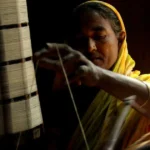
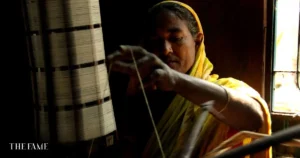
The movement created far more than fashion. It generated jobs, nurtured new designers, and built entire value chains—from weavers and dyers to embroiderers, pattern makers, photographers, stylists, and retail staff. Most importantly, it helped preserve traditional hand embroidery techniques and artisanal skills that risk disappearing if the next generation cannot see a future in them.
Today, Bangladesh is the world’s second-largest garments exporter, earning over USD 45 billion annually. Yet, paradoxically, we struggle to support our domestic fashion industry—a sector smaller in scale, but significant in impact. Industry estimates suggest that Bangladesh’s cottage, micro, small, and medium fashion and handicraft sector employs over 20 million people and contributes roughly 6–7% to GDP when linked value chains are considered. The locally driven fashion and lifestyle segment alone is now estimated as a billion-dollar market—young, promising, and full of potential.
And yet, we often overlook this reality. Every year, Bangladeshis spend hundreds of millions of dollars in neighboring countries’ markets, particularly during Eid, New Year celebrations, and wedding seasons. That money could strengthen local brands, expand artisan clusters, and create sustainable livelihoods here at home.

The Perils of Open Doors
The past year has been especially brutal. Political turmoil and economic uncertainty have affected nearly every sector, and local fashion is no exception. Many brands are barely surviving, pinning their hopes on Eid, Pohela Boishakh, and the wedding season, which collectively generate 60–70% of annual revenue. These few windows determine whether businesses live or die.
It is precisely at this fragile moment that we must ask difficult questions.
For years, direct imports of Pakistani brands were restricted. Instead, replicas of Pakistani regular wear were produced locally, supporting digital embroidery units and small factories across Bangladesh. While the ethics of replicas are debatable, the economic benefit was clear: the money circulated locally, paying workers, technicians, and suppliers.
Now, if high-end foreign brands are allowed to operate freely, profits will be repatriated abroad, while local designers—already struggling—will be pushed closer to extinction. This is not a competition on equal footing. It is survival versus scale.
Yes, Bangladesh believes in a free market. And yes, protectionism cannot be permanent. But no industry can thrive if exposed too early, too fast, and without safeguards.
What many people call protection in India isn’t just about tariffs: it also involves active cultural and economic promotion of traditional products. Take khadi, for example. The Khadi and Village Industries Commission (KVIC), a government body established in 1956, has long promoted khadi and village industries. Over the past decade, khadi sales and initiatives have reportedly surged-from
₹33,000 crore to more than ₹1.7 lakh crore driven in part by sustained government support and campaigns such as “Vocal for Local” and “Swadeshi” (The Times of India).
India also backs government-supported events, marketing platforms, and incentives designed to preserve and promote indigenous craft products. These are not
outcomes of pure “free market competition,” but deliberate policy measures aimed at giving traditional industries a fighting chance (The Times of India).
In contrast, Bangladesh’s fashion designers and brands still struggle with limited policy frameworks, scarce institutional support, and minimal government marketing, even though our textile industry is globally strong as a garment exporter.
So yes, you cannot expect Bangladeshi brands to “just compete” on equal footing when the ecosystem—design education, market support, cultural branding, and government incentives—is still underdeveloped compared to those long-established industries.
Our neighbouring countries understood this well. For over a decade, authorities nurtured local fashion before opening doors wider, giving brands time to mature, scale, and become export-ready. Bangladesh’s local fashion industry deserves the same chance.
The question, then, is not whether Bangladesh should open its doors, but how and when. Openness without preparation is not progress—it is neglect. If we believe local fashion is worth preserving, the time to protect, nurture, and strategically prepare it is now, before the doors open too wide to close.
Choices Over Trends
Supporting local fashion is not about nationalism or shutting doors. It is about economic sense, cultural preservation, and long-term sustainability. If we lose our artisans today, no number of foreign labels will bring them back tomorrow.

At this moment, as the industry hopes to recover through Eid, welcoming high-end foreign brands without policy support or protective frameworks risks jeopardizing the ecosystem we have worked so hard to build.
We should not simply ask whether foreign brands should come. We should ask when, how, and at what cost. Once an ecosystem collapses, rebuilding it is far harder than protecting it in time.
Trends are seductive, but health—and fashion—is personal. What works for neighboring brands, or foreign designs, may not work for our designers and artisans. Consumers’ choices are powerful: every purchase either strengthens homegrown talent or shifts value away from the people and skills that make Bangladesh unique.
By considering timing, policy safeguards, and mindful consumer behavior, Bangladesh can ensure that its local fashion industry thrives—preserving craft, creating jobs, and sustaining an ecosystem that foreign labels alone cannot replicate.
Sidebar: Bangladesh’s Fashion Ecosystem at a Glance
Economic Impact
- Garment exports: USD 45+ billion annually (world’s second largest exporter)
- Local fashion & lifestyle segment: Estimated USD 1 billion market, growing
- Cottage, micro, small, and medium fashion sector: Employs over 20 million people; contributes ~6–7% of GDP when linked value chains are considered
Artisans & Skills Preserved
- Traditional hand embroidery, weaving, and dyeing techniques
- Jobs for embroiderers, pattern makers, photographers, stylists, and retail staff
- Supports small-scale digital embroidery and micro-factories
Consumer Spending Trends
- Hundreds of millions spent annually in neighboring countries’ markets, particularly during Eid, weddings, and New Year
- Opportunity: Local purchasing could strengthen artisan clusters and expand domestic brands
Key Risk Points
- Fragile brands rely on a few seasonal peaks (Eid, Pohela Boishakh, wedding season) for 60–70% of annual revenue
- Unrestricted entry of foreign high-end brands may redirect profits abroad
- Early exposure without safeguards could endanger emerging designers and artisanal networks
Takeaway:
Every purchase matters. Supporting local fashion preserves craft, sustains jobs, and ensures Bangladesh’s creative ecosystem thrives in the long term.
Note: The views expressed in this article are the author’s own and do not necessarily reflect the position of the magazine or its editorial board. The publication is not responsible for any opinions or claims made by the writer.