
When politics turn volatile, social media turns ruthless. From Bangladesh to the diaspora, liberal and marginalized voices are facing online harassment, threats, and enforced silence. A mental wellbeing expert breaks down what this does to mental health—and how to survive it.
Political Change, Online Targeting, and the Bangladesh Context
Political transitions are often framed as moments of hope, reform, and renewal. Yet research by human rights organizations consistently shows that periods of regime change also heighten risks for liberal voices and marginalized groups. During these moments, individuals are frequently targeted based on political beliefs, cultural values, religious identities, or advocacy for social justice. Social media becomes a key battleground, where harassment escalates into coordinated tagging, ideological labeling, doxxing, public shaming, and threats.
In recent months, Bangladesh has seen growing evidence of these patterns. Online hostility has intensified alongside political unrest, affecting journalists, activists, artists, academics, and everyday citizens. These dynamics do not remain confined within national borders. Members of the Bangladeshi diaspora—particularly those speaking from abroad—are also targeted, accused of disloyalty, morally attacked, or threatened for expressing dissenting views. The digital nature of these attacks allows fear and intimidation to travel seamlessly across borders.
Psychological Impact: From Digital Attacks to Emotional Distress
According to Bangladeshi psychologist Anne Anthonia Baroi, Psychosocial Counselor and Lecturer at BRAC University, the psychological effects of sustained online harassment are profound and often underestimated. While the abuse may occur in digital spaces, its consequences manifest in daily life. Individuals commonly report fear, anxiety, shock, anger, and emotional exhaustion. Over time, these reactions can deepen into chronic anxiety, sleep disruption, difficulty concentrating, loss of confidence, and social withdrawal.
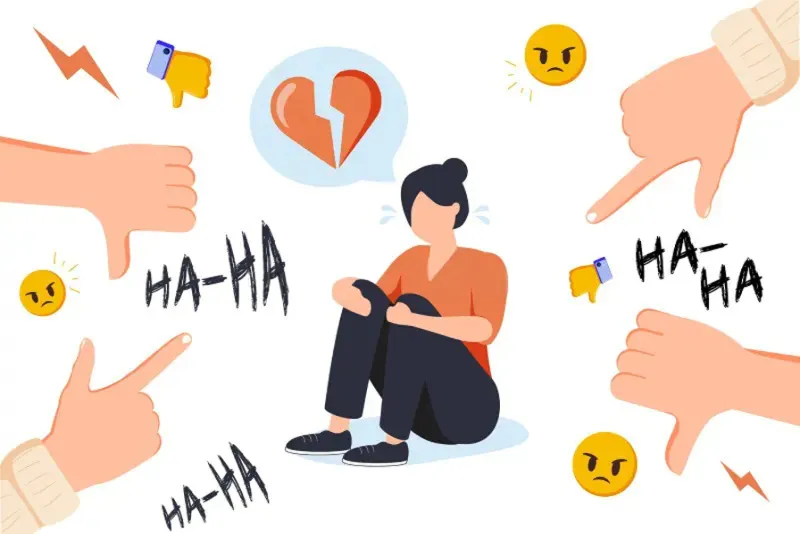
Repeated exposure to threats and political labeling can trigger a prolonged fight-or-flight response—a natural survival mechanism. When people feel continuously targeted, the nervous system remains on high alert. Some respond by confronting aggressors, while others withdraw, reduce online presence, or censor themselves entirely to stay safe. This enforced self-silencing is not a personal failure, but a protective response to perceived danger.
For both those in Bangladesh and the diaspora, isolation can be intensified by the fear of being misunderstood or unsupported. The pressure to remain silent in order to avoid further harm creates an invisible yet heavy mental burden.
Coping, Care, and Collective Responsibility
Acknowledging emotional reactions is a critical first step toward coping. Feelings of fear or distress are not signs of weakness; they are normal responses to prolonged hostility. Sharing experiences with trusted friends or community members can help process emotions and reduce isolation. In some cases, seeking professional mental health support may be essential for addressing trauma and suppressed fear.
Setting boundaries—both online and offline—can also protect emotional well-being. Limiting exposure to hostile spaces, documenting incidents of harassment, and assessing personal risk before engaging publicly are practical steps individuals may consider. When appropriate, legal guidance or institutional support can provide additional protection.
However, as Baroi emphasizes, individual coping is not enough. Sustainable change requires collective responsibility. Communities, institutions, and digital platforms must work together to prevent harassment, protect vulnerable voices, and ensure that disagreement does not escalate into intimidation or violence. Only through shared effort can political dialogue—both in Bangladesh and across its diaspora—exist without fear, allowing people to speak, dissent, and belong safely.