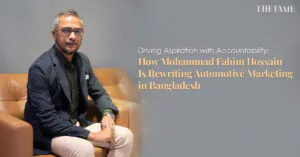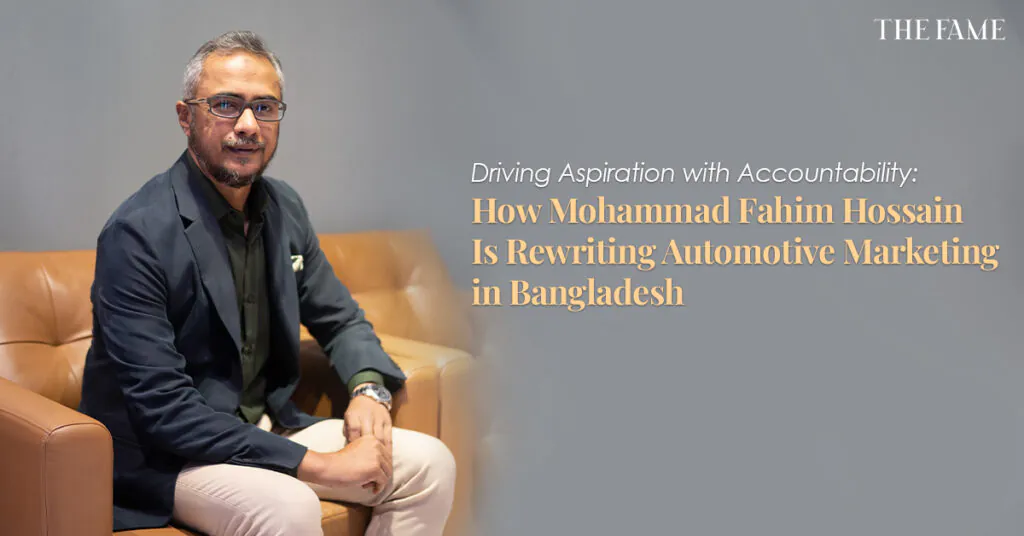
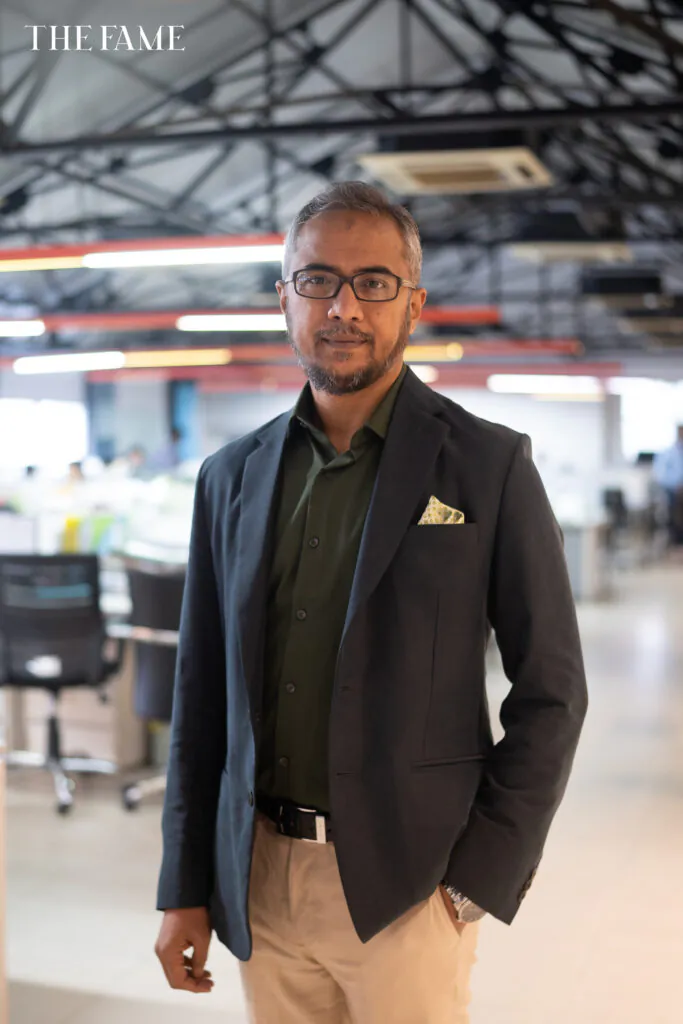
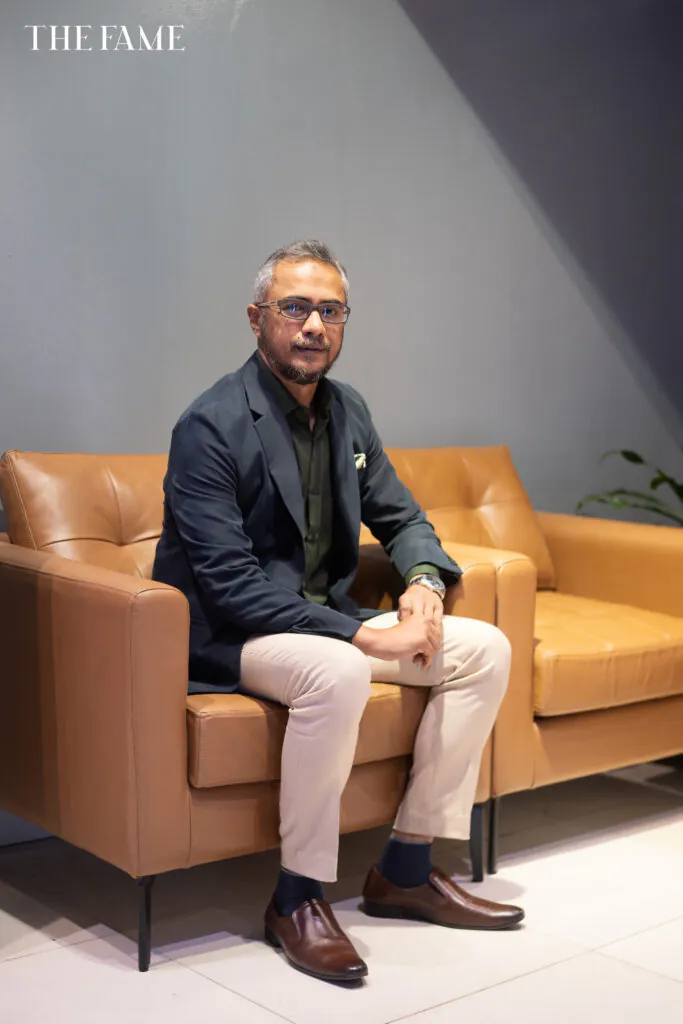
Bangladesh’s automotive sector is no longer the quiet, niche industry it was once assumed to be. With rising disposable incomes, expanding urban infrastructure, and a fast-growing middle class, the market has entered a new phase one defined by information-hungry, digitally fluent consumers. At the center of that shift is Mohammad Fahim Hossain, Marketing Manager of Mitsubishi Motors Bangladesh under RANCON Holdings.
Part of a diversified conglomerate that represents global automotive brands including Mitsubishi Motors, Mercedes-Benz, MG Motor and Proton, RANCON has played a significant role in formalizing Bangladesh’s passenger vehicle landscape particularly in the shift from gray-market imports to official distribution and now local assembly.
For Fahim, the turning point in his career and arguably for Mitsubishi’s positioning in Bangladesh came with a bold operational shift.
From Trading House to Local Value Creator
“The defining moment that fundamentally shaped my approach was leading the transition from a purely import-dependent trading model to a local manufacturing, value-addition model with the launch of the locally assembled Mitsubishi Xpander,” he says.
For years, the passenger vehicle market in Bangladesh was largely driven by reconditioned Japanese imports, which still account for a major share of annual registrations. Brand-new official imports, burdened by high duties and price gaps, competed in a narrow segment. The industry narrative often framed the market as “small” and “uninformed.”
Fahim challenges that assumption directly.
“The initial assumption in the industry was that the Bangladeshi automotive market was inherently ‘niche,’ with a relatively uninformed consumer base,” he explains. “The reality we uncovered was a market teeming with curiosity, aspiration, and an intense desire for detailed, credible information. The consumer was not uninformed; they were underserved.”
That realization reshaped Mitsubishi’s communication strategy. Instead of marketing to a limited, technically savvy group, the brand decided to democratize automotive knowledge. The team invested heavily in localized content breaking down features like ground clearance, safety standards, maintenance cycles, and suspension durability in ways that were accessible to first-time buyers.
“We pivoted from treating this as a niche sector to making it the ‘Talk of the Town,’” Fahim says. “Information became our most powerful product.”
Local assembly further strengthened that shift. By assembling the Mitsubishi Xpander at RANCON’s RAIL facility, the company was able to rationalize pricing and shorten delivery timelines, addressing affordability without eroding brand equity. It marked a move from import dependency to value creation within Bangladesh.
Marketing at the Intersection of Pride and Practicality
Bangladeshi car buyers, Fahim believes, operate on two emotional frequencies: aspiration and arithmetic.
“My philosophy lies at the intersection of prestige and pragmatism,” he says. “Buyers want the pride of owning an international brand rooted in Mitsubishi’s heritage. But they also want durability for local roads, reliable after-sales support, and the logic of a smart investment.”
This duality defines Mitsubishi’s brand tone in Bangladesh. It is positioned as a global marque with decades of engineering credibility but one adapted for Dhaka traffic, monsoon flooding, and multi-generational family travel.
That brings him to what he calls the single most important emotional chord in automotive marketing: “Assured Family Comfort and Reliability.”
“The customer needs to feel that, regardless of road conditions, their Mitsubishi will reliably serve their family’s every need,” he says.
For example, the Xpander’s 220mm ground clearance and reinforced suspension system are consistently highlighted not as technical bragging points, but as practical solutions for uneven roads and waterlogged streets. “We position Mitsubishi not just as a global brand, but as a robust, road-ready partner built for Bangladesh.”
Trust Is Built After the Sale
In a market where a car purchase can equal several years of savings, trust extends beyond advertising.
“We believe the relationship with our customers starts well before the moment they purchase,” Fahim notes. “But it must deepen after the sale.”
Mitsubishi’s five-year warranty and two years of six complimentary servicing sessions are central to that promise. The brand also emphasizes genuine spare parts availability and strict quality protocols aligned with Mitsubishi Motors Japan.
In contrast to gray-market imports which often come without verified service history or warranty backing Fahim shifts the conversation toward total cost of ownership.
“You may pay almost equal or a little more upfront,” he says, “but you are paying for guaranteed peace of mind unlike the hidden risks of the gray market.”
He points out that resale value plays a decisive role in Bangladeshi buying behavior. “Resale is not an afterthought here; it’s part of the buying decision from day one.” Official imports with documented maintenance records consistently command stronger resale performance than undocumented alternatives.
A Digital-First Automotive Buyer
Bangladesh has over 70 million internet users, with social media penetration continuing to rise annually. That digital shift is transforming automotive marketing.
“The digital behavior of a potential customer is characterized by intensive pre-purchase research and price sensitivity,” Fahim says. “The entire journey is overwhelmingly social media-driven.”
Video-first research dominates YouTube reviews, creator walkthroughs, testimonials, and comparison videos influence early-stage consideration. Buyers compare specifications and pricing across multiple channels long before visiting a showroom.
To adapt, Mitsubishi invests in localized, searchable video content answering practical concerns mileage expectations, ground clearance tests, feature demonstrations. Digital lead forms capture intent, and the sales team responds quickly to ensure continuity.
“Our ultimate goal is a confirmed test drive booking through a frictionless online portal,” he explains. “The physical interaction starts informed. The salesperson addresses the buyer’s digital research history immediately, so the offline experience feels like a continuation not a reset.”
Calculated Risk, Not Reckless Creativity
Inside his marketing team, experimentation is encouraged but measured.
“We foster creativity by building an environment where failure is treated as experience, not destiny,” Fahim says. Pilot campaigns are launched digitally with defined KPIs before scaling.
The grand launch of the Mitsubishi Xpander exemplified this approach. Instead of relying solely on conventional TVCs and print ads, the brand rolled out a fully integrated, digital-first campaign. Trending reels, creator collaborations, factory storytelling, pre-booking content, and real owner testimonials formed a 360-degree narrative.
“We didn’t just sell a car,” Fahim says. “We demonstrated trust, transparency, and long-term commitment.”
The result was a perceptible shift in brand perception from a legacy name to an aspirational yet attainable option among younger, digitally active buyers.
Local Solutions in a Global Conversation
Perhaps the most unconventional move during the Xpander’s rollout was the introduction of the Xpander Eco variant with a factory-fitted LPG system.
“Bangladesh is an extremely price-sensitive market, especially regarding long-term running costs,” Fahim says. “While global conversations are dominated by hybrids and EVs, we focused on the immediate reality of local consumers fuel price anxiety and infrastructure availability.”
By clearly demonstrating how the LPG-powered variant significantly reduces running costs bringing fuel expenses closer to hybrid levels without charging infrastructure limitations the campaign resonated strongly. Interest and bookings exceeded initial projections.
It was a reminder that localization often outperforms imitation.
Preparing for the EV Evolution
Looking ahead, Fahim sees electrification as an evolution rather than disruption.
“Technology adoption must be driven by real customer needs rather than global trends alone,” he says.
Through RANCON’s broader portfolio, advanced electric and hybrid models including the Mercedes EQE and EQS series, MG Cyberster, MG4 EV, and MG HS Super Hybrid have already entered the Bangladeshi market. But widespread adoption will depend on affordability, charging infrastructure, and clear communication of long-term value.
“In Bangladesh, marketing may shift from highlighting technology for its novelty to explaining its everyday value,” he adds.
With a range spanning conventional, alternative fuel, hybrid, and fully electric vehicles, RANCON is positioning itself to serve diverse readiness levels within the market.
For Mohammad Fahim Hossain, the strategy remains consistent: respect the intelligence of the consumer, speak honestly about value, and build trust beyond the transaction.
In a market once dismissed as niche, that mindset may prove to be the most powerful engine of all.
Photographs- Ahamed Zubayer