From November 6 to 8, 2025, Dhaka Flow transformed Shahabuddin Park (Gulshan-2) into a sprawling sanctuary of wellness, movement, art, and community. The festival — now firmly established as Bangladesh’s leading wellness platform drew together thousands under the guiding mantra: healing is collective.
A Festival Born of Healing and a City’s Need to Breathe
What began as a response to urban stress and disconnection has grown into a cultural movement. The Flow Fest’s purpose stretches beyond just trend: it is rooted in compassion, inclusivity, and conscious living. This year’s edition carried forward that legacy. The festival opened its gates with the theme “Wellness as a Collective Experience.” Attendees were invited to reimagine wellbeing not as a private fix, but as a shared journey. Across five immersive zones — the Fitness Pavilion, the Meditation Garden, the Art + Soul Zone, the Playground, and the Amphitheatre — The Flow Fest Dhaka 2025 offered something for nearly everyone.
Days That Started With Breath, Movement, and Intention
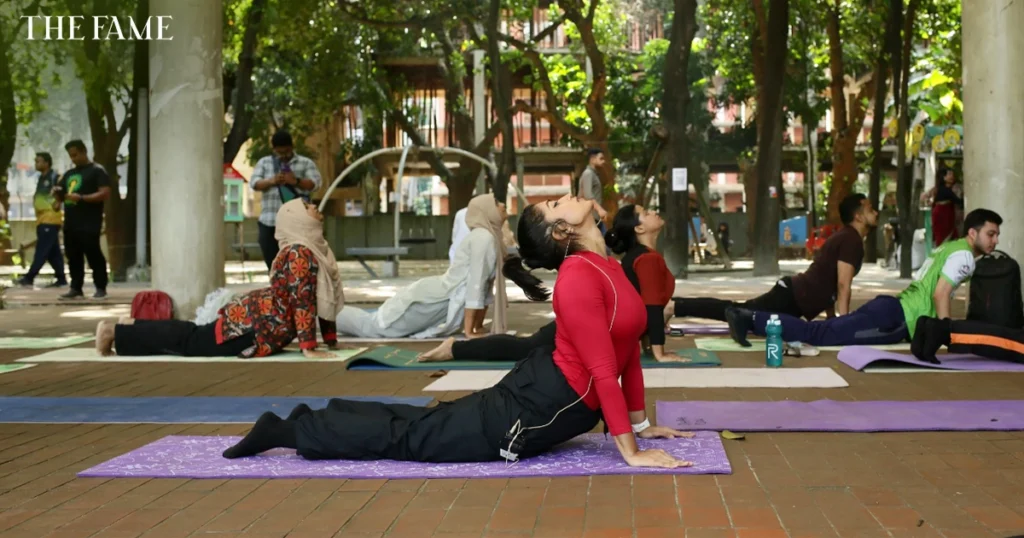
Each morning began early: a community 5 km run, followed by sunrise yoga, breathwork, martial arts and strength training. International coaches and local trainers led these sessions, offering guidance in holistic fitness and inner calm. For many, the day began not with the rush of a commute or a phone screen, but with collective breath and mindful movement. The festival’s rhythm encouraged breaking away from everyday chaos and stepping into presence. As the sun rose, the park transformed: people stretching on mats, groups practicing martial arts, others quietly sitting in meditation. It was a rare moment for a city often defined by noise a quiet reclaiming of space and self.
Wellness, Art, Conversation: A Festival That Didn’t Stop at Fitness
But Flow Fest wasn’t just about physical movement. It was also a space for creativity and reflection. In the Art Soul Zone, participants tried pottery, painting, journaling, and other mindful crafts. Local artists ran workshops that gave visitors a chance to explore vulnerability and self-expression through making. Children had their own space too. Through storytelling, Zumba, and playful fitness activities, the festival planted seeds of awareness about health, mindfulness, and community from a young age.
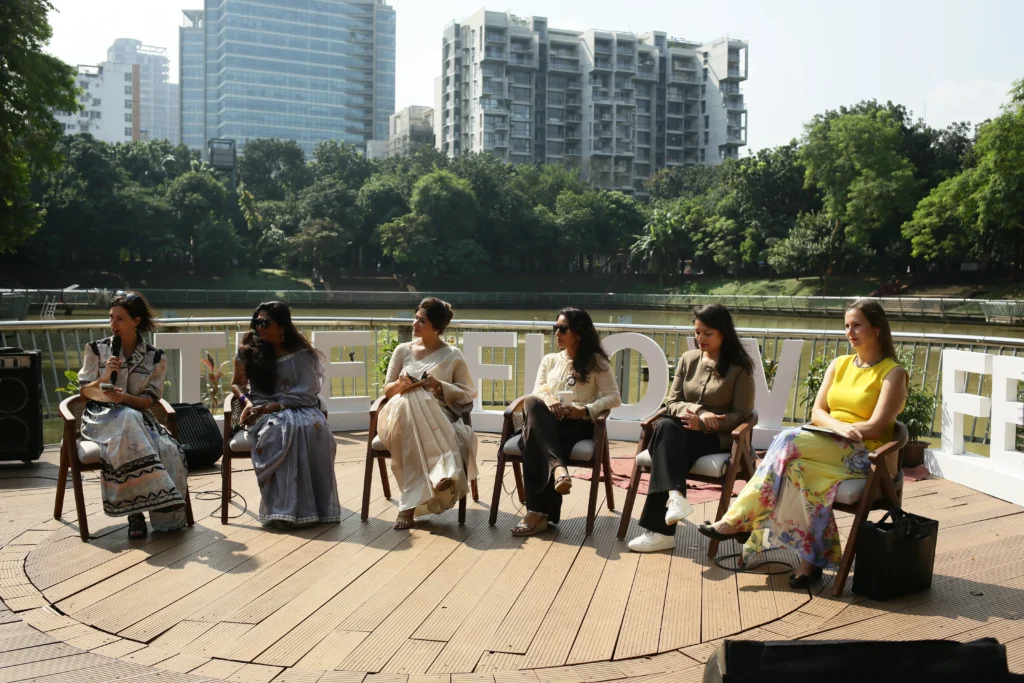
Aside from workshops, The Flow Fest offered panel discussions on mental health, nutrition, sustainable living, and gender and community dialogues – weaving wellness with social awareness. For many visitors, it was an invitation to think differently about what health and wellbeing mean in contemporary Dhaka. For two days, the park became a market of conscious

brands, vegetarian-friendly food stalls, and eco-friendly vendors – blending mindful consumption with community spirit.
Even the festival’s aesthetics reflected its values: clean-air workshops, urban-greening exhibits, and a push for sustainability and respect for nature made clear that this was about more than just looking good or feeling good. It was about living thoughtfully.
A City Responds – 23,000 Souls Found a Collective Pulse
At the end of the three days, the numbers spoke for themselves. Over 23,000 people visited Flow Fest 2025 – a clear sign that Dhaka is ready for experiences beyond standard concerts and fairs. For many attendees, it was transformative. As one longtime fan said, she came in seeking calm but found reconnection. Another visitor, drawn initially by fitness sessions, ended up discovering a new way to think about wellbeing: through art, movement, and community. More than that: the festival opened a door for a deeper conversation about mental health, sustainable living, community belonging, and the value of shared joy.
Why Flow Fest Matters and What Comes Next
What The Flow Fest showed this year is that wellness doesn’t belong just to gyms or retreats. It can live in urban parks, in collective breath, and in gatherings that honour both body and soul.
It created space for people to heal – together. It offered tools for physical strength and mental calm. It gave a platform to creativity, awareness, and expression. It reminded a fast-paced city that slowing down and connecting is not weakness but strength. As one of the festival’s founders put it: “When creativity meets compassion, wellbeing becomes contagious.”
If anything, Flow Fest 2025 proved that a healthy future is not just possible — it’s already beginning. And if the turnout and response are any guide, this festival won’t stay confined to a weekend. It may well become the pulse of a new cultural movement for Dhaka and beyond.
Breakfast Club Dhaka Finds Its Flow at Flow Fest 2025
Breakfast Club Dhaka’s presence at Flow Fest 2025 felt less like a performance booking and more like a natural alignment. Known for reshaping how the city experiences electronic music, the collective stepped into a space where movement, mindfulness, and music already coexisted. The Flow Lifestyle wasn’t something they had to adapt to—it was something they had already been practicing.
Playing in a morning setting, after sessions of yoga, meditation, and conscious movement, reframed their relationship with sound. As they describe it, “Flow Fest 2025 deepened our understanding of how music interacts with movement and mindfulness in a daytime setting.”
The usual pressure to drive energy upward disappeared. Instead, the set focused on subtlety-sounds that moved gently through the body. “The ‘Flow Life’ philosophy encouraged us to think beyond rhythm to consider breath, stillness, and collective intention.”
This shift wasn’t calculated; it was responsive. The audience had arrived already tuned inward. “Performing for an audience that had just connected through yoga, meditation, or morning movement shifted our creative direction toward softer rises, gentler transitions, and textures that support openness.” In that moment, music became part of a larger physical and emotional experience rather than the center of attention. What truly defined the set was the people. Flow Fest brought together students, families, and older attendees, all sharing space without hierarchy. “Instead of a typical audience–performer dynamic, it became a shared morning ritual,” the group reflected. That sense of ease and openness mirrored everything Breakfast Club set out to create. “Seeing so many different generations moving together so openly reaffirmed the kind of community we want to nurture.”
For Breakfast Club, community has always mattered more than scale. “Flow made it clear that Dhaka is ready for cultural spaces that feel safe, wholesome, and emotionally uplifting.” The festival reinforced their belief that music doesn’t always need darkness or excess to feel powerful it can be grounded, sober, and human. The roots of Breakfast Club lie in this very idea. “Breakfast Club emerged from the desire to reimagine how Dhaka experiences music—to move away from the limitations of night and bring electronic culture into the clarity of morning light.” What began as a simple idea grew into a weekly ritual, shaped by warmth, melody, and intention rather than volume. “We wanted to create something accessible and emotionally uplifting,” they said, a vision that naturally aligned with Flow Fest’s philosophy. Ticketed Breakfast Club gatherings have always reflected this approach limited-capacity, daytime events centered on music, conversation, and shared presence rather than spectacle. Flow Fest extended that same intimacy to a larger space without losing its essence.
Looking back, performing at Flow Fest felt less like a milestone and more like confirmation. “Flow reminded us that music in the morning isn’t just heard it’s felt through the entire body.”
As the set ended, there was no rush, no abrupt drop in energy. People stayed, talked, moved slowly, and carried the morning forward with them. In that quiet continuation, Breakfast Club Dhaka embodied the Flow Lifestyle- not as a concept, but as something lived.
Arthy Ahmed and the Pulse of Community at Flow Fest 2025
At Flow Fest 2025, movement became a shared language, and few embodied this more clearly than Arthy Ahmed. As one of the most prominent coaches at this year’s festival, her sessions drew people in almost instinctively. Children, adults, seniors, first-time dancers, and seasoned movers stepped onto the floor together, not to perform, but to participate. What unfolded was less about choreography and more about community. For Arthy, Flow Fest has always been familiar ground, but this year marked a shift. “Flow Fest has always felt like home to me, but this year influenced my work in a new way,” she shared. One moment in particular stayed with her watching over a hundred adult beginners perform Bharatanatyam, followed by a collective dance session that filled the basketball court within seconds. “It showed me the power of movement to dissolve barriers.”
That experience reshaped how she now thinks about dance. Rather than aiming for technical perfection, her focus moved toward participation. “It inspired me to create choreography that emphasizes inclusivity, confidence, and shared joy rather than perfection.” The result was visible in how easily people joined in, unselfconscious and
present.

Dance, in Arthy’s practice, is not separated from social reality. She believes movement has the ability to open difficult conversations gently, without confrontation. “Dance can spark meaningful dialogue by giving people permission to express what they’re often taught to hide emotion, vulnerability, identity.” In a country rich in artistic history, she observes that many have drifted away from everyday creative expression. What Flow Fest offered was a reminder. “When people see others like themselves dancing freely, it challenges social norms and opens conversations about confidence, belonging, and unity.” The response after the festival only confirmed this. Videos from her sessions spread widely, drawing messages from viewers who felt moved or inspired. “After the video went viral, we received overwhelming appreciation from viewers who felt encouraged to reconnect with dance.” But one realization stood out most for her. “Something as simple as
people dancing together still feels unusual to many.” That insight strengthened her commitment to making shared movement feel natural again. What made Arthy Ahmed’s presence at Flow Fest so impactful was not just her skill as a dancer or choreographer, but her ability to hold space. Flow Fest’s emphasis on wellness, openness, and mindful living aligned seamlessly with her approach. Movement became a tool for connection rather than display, inviting everyone in, regardless of age, background, or experience.
In a festival built around the Flow Lifestyle, her sessions demonstrated what flow looks like in practice, when people move together, barriers soften, self-consciousness fades, and a temporary community forms through rhythm and trust. At Flow Fest 2025, Arthy Ahmed didn’t just lead a dance. She brought people together, and for a moment, reminded them how natural that can be.